







What's Happening?
The electronics and semiconductors sector is experiencing significant growth, driven by the increasing demand for technology, particularly in artificial intelligence and data centers. Key players in the Electronics Manufacturing Services (EMS) industry,
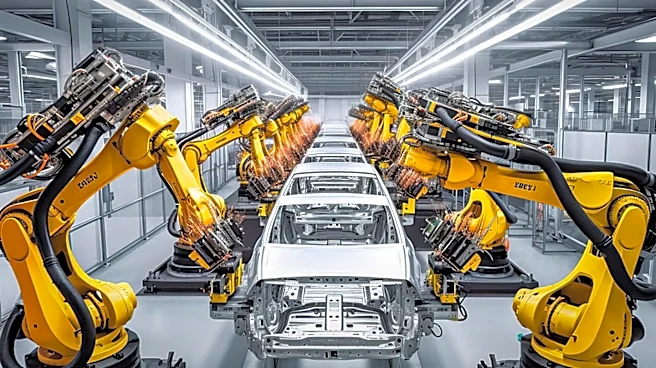
such as Syrma SGS and Aimtron Electronics, are aggressively expanding their operations to capitalize on this trend. Syrma SGS, known for its high-mix, flexible-volume manufacturing, is investing in state-of-the-art Surface Mount Technology (SMT) lines to provide end-to-end solutions from design to assembly. Aimtron Electronics is transitioning from a typical EMS player to an Original Design Manufacturer (ODM), focusing on capturing more value per product by owning the design process. The company has also acquired International Control Services Inc. to strengthen its capabilities and expand its reach in the U.S. market. These expansions are part of a broader trend where EMS companies are moving up the value chain through strategic backward integration and acquisitions.
Why It's Important?
The aggressive expansion plans of EMS companies like Syrma SGS and Aimtron Electronics are crucial as they reflect the shifting dynamics in the global electronics manufacturing landscape. By moving up the value chain and focusing on high-tech manufacturing, these companies are positioning themselves to meet the growing demand for advanced electronics in sectors such as automotive, aerospace, and medical. This shift is significant for the U.S. market, as it could lead to increased collaboration with American companies and potentially reduce reliance on foreign manufacturing. The expansion also highlights the importance of strategic investments in technology and infrastructure to maintain competitiveness in a rapidly evolving industry. As these companies grow, they are likely to create more jobs and contribute to economic growth, while also addressing supply chain challenges by increasing domestic production capabilities.
What's Next?
As EMS companies continue to expand, they are expected to focus on further integrating their operations and enhancing their technological capabilities. This could involve additional investments in research and development, as well as strategic partnerships with other technology firms. The expansion into high-growth verticals such as electric vehicles, 5G infrastructure, and indigenous defense production will likely continue, driven by increasing demand for high-reliability, high-tech manufacturing. Companies may also explore opportunities to expand their presence in international markets, leveraging their enhanced capabilities to capture a larger share of the global electronics manufacturing market. The success of these expansion efforts will depend on the companies' ability to execute their plans effectively and adapt to changing market conditions.
Beyond the Headlines
The expansion of EMS companies into high-tech manufacturing has broader implications for the global electronics industry. It signifies a shift towards more sustainable and resilient supply chains, as companies seek to reduce their dependence on foreign manufacturing and increase domestic production capabilities. This trend could lead to a more balanced global electronics market, with increased competition and innovation. Additionally, the focus on high-tech manufacturing aligns with global efforts to address environmental concerns, as companies invest in more efficient and sustainable production processes. The expansion also raises questions about the future of the workforce, as companies may need to invest in training and development to equip employees with the skills needed for advanced manufacturing roles.