



What's Happening?
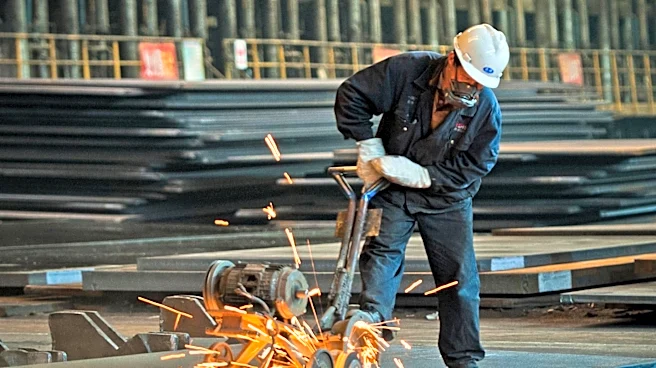
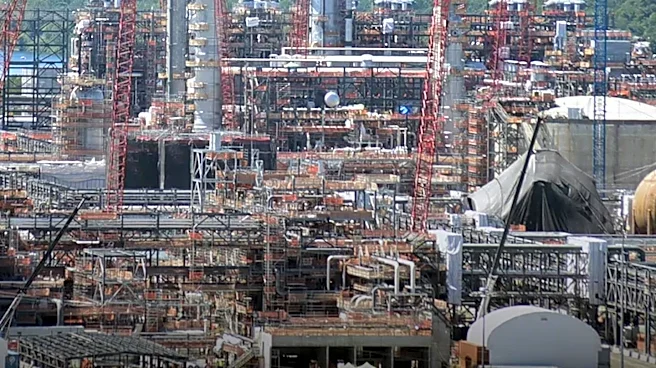
United States Steel Corporation has commenced construction on a new $1.9 billion Direct Reduced Iron (DRI) plant at Big River. This investment is part of a larger trend within the global steel industry, which has seen over $35 billion committed to new capacity
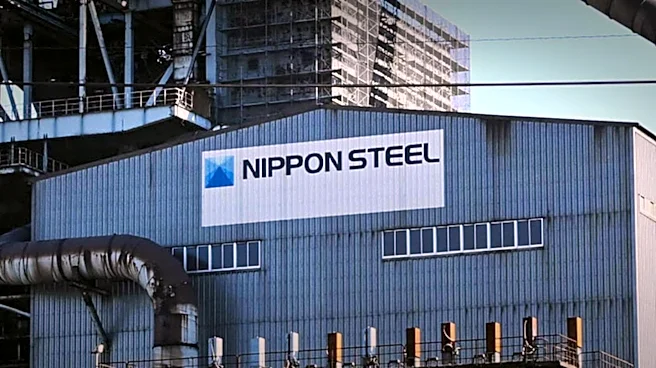
and projects in a matter of weeks. Notably, Nippon Steel Corporation has also committed approximately $3 billion to a new hot-strip mill. Other significant investments include Salzgitter AG's EUR 2.7 billion SALCOS conversion, ArcelorMittal's EUR 1.3 billion Dunkirk electric arc furnace, and various other projects across Europe and Asia. These investments are primarily focused on modernizing facilities, increasing capacity, and transitioning towards more sustainable and low-carbon steel production methods.
Why It's Important?
The groundbreaking of U.S. Steel's $1.9 billion DRI plant is a significant development for the American steel industry. It represents a substantial investment in domestic manufacturing capabilities and a move towards more environmentally friendly production processes, as DRI technology reduces reliance on traditional blast furnaces. This investment, coupled with Nippon Steel's commitment to a new hot-strip mill, signals a renewed focus on modernizing and expanding U.S. steel production. The broader global investment of over $35 billion underscores a worldwide push to enhance steel capacity and adopt advanced technologies. This surge in investment is crucial for meeting future demand, particularly for low-carbon steel, and for maintaining competitiveness in the global market. It also highlights the industry's response to evolving environmental regulations and the increasing demand for sustainable materials.
What's Next?
The construction of U.S. Steel's DRI plant will proceed, with an anticipated timeline for completion and operational readiness. Similarly, Nippon Steel's hot-strip mill and other global projects will continue their development phases. These investments are expected to lead to increased production capacity and a shift in the types of raw materials required, with a growing demand for DR-grade pellet, low-residual scrap, and HBI. The industry will face the challenge of securing these feedstocks, which will likely involve new supply chain developments and potential shifts in global trade patterns. The focus on sustainable production methods will also drive further innovation and investment in green steel technologies. The coming years will see ongoing discussions and agreements regarding feedstock sourcing and product off-take, shaping the future landscape of the steel trade.
Beyond the Headlines
The massive investment in new steel capacity, particularly in DRI and electric arc furnaces, signifies a fundamental transformation within the steel industry. This shift is driven not only by economic demand but also by environmental imperatives, as companies strive to reduce their carbon footprint. The move towards low-carbon steel production will have far-reaching implications for energy consumption, raw material sourcing, and technological innovation. It also raises ethical considerations regarding the environmental impact of mining for new feedstocks and the responsible disposal of byproducts. The long-term success of these investments will depend on the industry's ability to adapt to these changes, secure sustainable supply chains, and meet the evolving demands of consumers and regulators for greener products. This transformation could redefine the global steel market, favoring regions and companies that successfully embrace these new production paradigms.