


What's Happening?
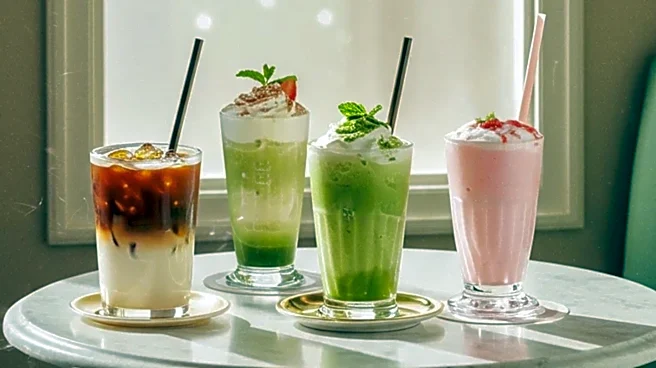
Businesses in Hampton Roads are increasingly embracing the non-alcoholic beverage trend, driven by a shift in consumer preferences, particularly among younger adults. Establishments like Point 5, a retail store specializing in non-alcoholic options, and
restaurants such as Saudade and Lantern, are expanding their offerings to include sophisticated non-alcoholic wines, beers, spirit alternatives, and mocktails. This adaptation is a direct response to a growing health consciousness and a desire for moderation among consumers. A 2023 Gallup survey indicates a significant decline in alcohol consumption among adults under 35, with the share dropping from 72% in 2001-2003 to 62% in 2021-2023. Local breweries like Precarious Beer Project and Alewerks Brewing Co. are also diversifying their product lines to include non-alcoholic beers and craft sodas, acknowledging that non-alcoholic options are no longer an afterthought but a key part of their business strategy.
Why It's Important?
This trend signifies a notable shift in the U.S. beverage industry and consumer behavior, impacting local economies and public health. For businesses, adapting to this demand can open new revenue streams and attract a broader customer base, including those who choose not to drink alcohol for health, personal, or religious reasons. The increased availability of diverse non-alcoholic options removes social awkwardness for non-drinkers, fostering more inclusive social environments. From a public health perspective, a reduction in alcohol consumption, especially among younger demographics, could lead to long-term benefits, including decreased rates of alcohol-related illnesses and accidents. This movement also challenges traditional perceptions of social gatherings and dining experiences, pushing establishments to innovate beyond alcohol-centric models and focus on flavor, creativity, and overall customer experience.
What's Next?
The expansion of non-alcoholic options is expected to continue as consumer preferences evolve. More restaurants, bars, and breweries are likely to follow suit, integrating extensive non-alcoholic menus that mirror the creativity and quality of their alcoholic counterparts. Mixologists will increasingly utilize unique ingredients and techniques to craft appealing mocktails and non-alcoholic beverages. This trend could also spur further innovation in the non-alcoholic beverage market, leading to a wider array of products and brands. Educational initiatives and marketing efforts will likely focus on destigmatizing non-alcoholic choices and highlighting the health and lifestyle benefits of moderation. The success of businesses like Point 5 and Lantern suggests a sustainable market for these products, encouraging further investment and development in the sector.
Beyond the Headlines
The rise of the non-alcoholic movement reflects deeper cultural shifts towards wellness, mindfulness, and intentional living in the U.S. It challenges the long-standing social norm that alcohol is a prerequisite for celebration or relaxation. This shift has ethical implications, promoting healthier choices and potentially reducing societal pressures to consume alcohol. Legally, it may lead to new regulations or classifications for non-alcoholic products, ensuring consumer clarity and safety. Culturally, it fosters more inclusive social spaces where individuals can participate fully without feeling obligated to drink alcohol. This movement also highlights a generational change in values, with younger adults prioritizing health and conscious consumption, which could have lasting effects on the food and beverage industry and broader societal norms around substance use.