







What's Happening?
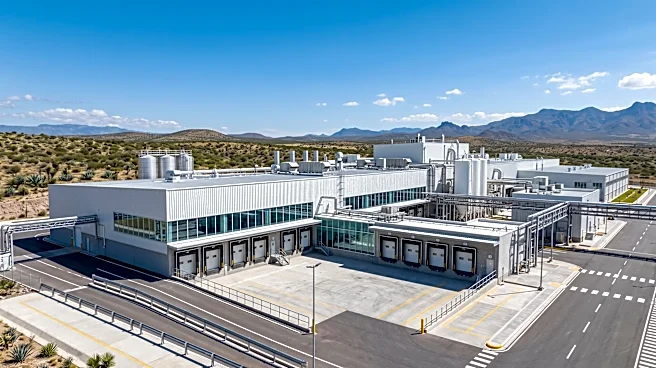
Pilgrim’s Pride Corporation, a multinational chicken producer, is set to inaugurate its new $40 million El Porvenir plant in Gómez Palacio, Durango, Mexico. This facility is projected to create over 300 jobs. This opening is part of a larger investment
strategy by Pilgrim's Pride, totaling $1.3 billion in Mexico between 2026 and 2030. This significant investment aligns with the Sheinbaum government’s Plan México economic strategy, aiming to increase production by more than 373,000 metric tonnes and generate over 4,000 direct and 16,000 indirect jobs across various Mexican states. The investment will be distributed, with $200 million for Durango and Coahuila, $150 million for Querétaro, San Luis Potosí, and Hidalgo, and $950 million for Veracruz, Campeche, and Yucatán. The new Durango plant will also expand Pilgrim’s value-added product range by producing cooked chicken, reinforcing Durango's position as an industrial and agri-food hub.
Why It's Important?
This substantial investment by Pilgrim's Pride in Mexico underscores a growing trend of U.S.-based companies expanding their operations internationally, particularly in neighboring countries. For the U.S. poultry industry, this expansion could signify a strategic move to diversify production and supply chains, potentially mitigating risks associated with domestic market fluctuations or trade policies. While the immediate impact on U.S. jobs might not be direct, the increased production capacity in Mexico could influence cross-border trade dynamics and competition within the North American food market. The creation of thousands of jobs in Mexico also highlights the economic interdependence between the two nations and the potential for shared growth, even as U.S. companies seek to optimize their global footprint. This move could also lead to a more robust and resilient supply chain for Pilgrim's Pride, benefiting its overall business operations and potentially its U.S. market presence through enhanced product availability and cost efficiencies.
What's Next?
The opening of the El Porvenir plant marks a significant step in Pilgrim's Pride's broader investment plan in Mexico. Over the next four years, the company will continue to allocate the remaining $1.26 billion across various Mexican states, focusing on increasing production capacity and expanding its product offerings. This ongoing investment is expected to further integrate Pilgrim's Pride into the Mexican economy, potentially leading to more partnerships with local suppliers and continued job creation. The success of these investments could serve as a model for other U.S. food producers considering international expansion. Additionally, the collaboration between Pilgrim's Pride and the Mexican federal government, which has provided investment incentives, suggests a supportive environment for foreign direct investment, potentially attracting more U.S. businesses to the region. The company's focus on value-added products, such as cooked chicken, indicates a strategic shift towards higher-margin offerings, which could influence its market strategy in both Mexico and the U.S.
Beyond the Headlines
The investment by Pilgrim's Pride in Mexico reflects a broader economic strategy by the Mexican government to attract foreign investment and boost its industrial and agri-food sectors. The emphasis on digitalizing processes and creating a 'one-stop shop' for investments suggests an effort to streamline bureaucratic hurdles and create a more business-friendly environment. This could have long-term implications for regional economic development and integration, potentially fostering a more interconnected North American supply chain. From an ethical standpoint, the creation of thousands of jobs, both direct and indirect, could significantly impact local communities in Mexico, providing economic opportunities and improving livelihoods. However, it also raises questions about labor standards and environmental practices, which will be crucial to monitor as these large-scale operations expand. The move also highlights the increasing globalization of food production and the complex interplay between national economic policies and corporate investment strategies.