

What's Happening?
Concerns are emerging regarding AJ Dybantsa's role and fit with the Washington Wizards, particularly in light of Darryn Peterson's strong performance with the Utah Jazz. Dybantsa, who was drafted ahead of Peterson, has seen his on-paper production lag
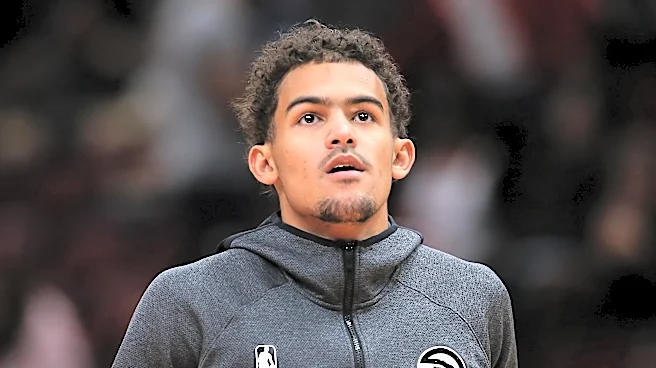
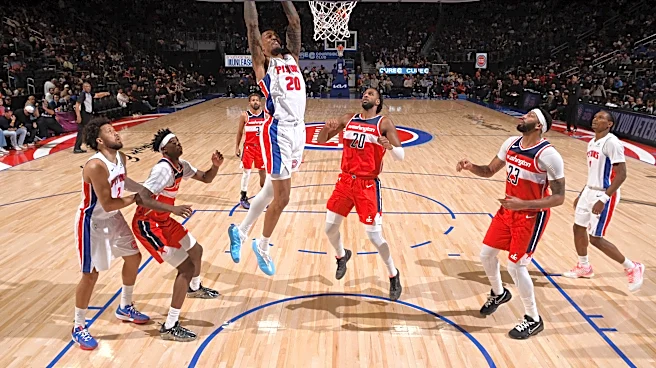
behind his rival. While Peterson has benefited from injuries to key Jazz players, allowing him to flourish as a primary scorer, Dybantsa is operating within a more crowded and limiting context in Washington. The Wizards' roster includes established players like Trae Young and Anthony Davis, along with other intriguing scorers such as Kyshawn George and Alex Sarr, which has led to a cramped starting lineup and underutilization of some capable creators. Dybantsa's usage rate over his last five games ranks 111th league-wide, significantly lower than Peterson's. The Wizards' offense, ranked 26th in the league, struggles with poor spacing and a reliance on Trae Young's heliocentric playstyle, further complicating Dybantsa's integration and development.
Why It's Important?
The situation surrounding AJ Dybantsa's development with the Washington Wizards is important for several reasons. For the Wizards, a significant investment was made in Dybantsa as a high draft pick, and his optimal development is crucial for the team's future success and rebuilding efforts. If Dybantsa's talent is not fully utilized or he struggles to find a defined role, it could represent a missed opportunity for the franchise and potentially impact fan engagement and future draft strategies. For Dybantsa himself, a limited role could hinder his growth as a player, affecting his long-term NBA career trajectory and potential earnings. The comparison with Darryn Peterson highlights the pressure on high draft picks to perform and the impact of team context on a rookie's early career. Furthermore, the Wizards' offensive struggles, characterized by poor spacing and a heavy reliance on one player, underscore broader issues in team construction and coaching philosophy that could affect the entire roster's performance and the team's competitiveness in the league.
What's Next?
The immediate future for AJ Dybantsa and the Washington Wizards will likely involve continued efforts to integrate him more effectively into the team's offense. However, significant changes may be challenging given the current roster composition and established roles. Trae Young, with his substantial contract, is expected to continue controlling the offense for the foreseeable future, potentially limiting Dybantsa's opportunities to be a primary ball-handler or scorer. The Wizards' coaching staff will need to find ways to create more advantageous situations for Dybantsa, especially in transition and by addressing the team's spacing issues. Without a sudden wave of injuries similar to what benefited Darryn Peterson, Dybantsa may need to continue to adapt to a secondary role while waiting for more significant breakout opportunities. The team's upcoming games against competitive Western Conference teams will further test their offensive strategies and Dybantsa's ability to contribute within the existing framework.
Beyond the Headlines
Beyond the immediate on-court dynamics, the situation with AJ Dybantsa and the Wizards touches upon broader themes in professional sports, particularly the challenges of player development in a team-centric environment. It highlights the tension between maximizing the potential of a high draft pick and the immediate demands of team performance and established veteran roles. The narrative also raises questions about organizational philosophy: whether a team prioritizes the development of young talent by giving them significant usage, even if it means short-term struggles, or if it leans on established players for immediate competitiveness. This scenario could also influence future draft decisions and trade strategies for the Wizards, as they assess how to best build a cohesive and effective roster around their young prospects. The comparison with Peterson also underscores the often-unpredictable nature of rookie success, where external factors like teammate injuries and team context can significantly impact a player's early career trajectory.