



What's Happening?
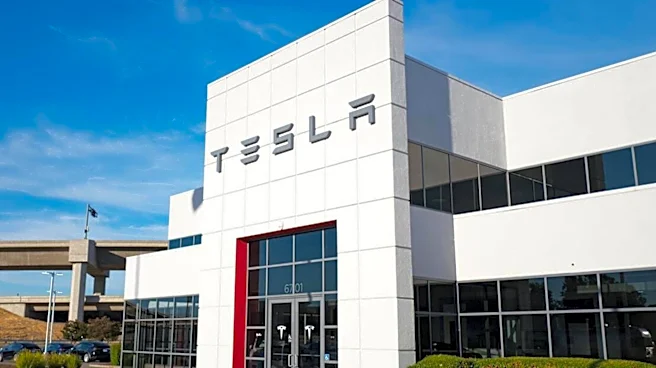
Tesla's stock experienced a significant decline, falling by 18% in a single week following the company's second-quarter earnings report. Despite reporting strong revenue growth, with over $100 billion in trailing-12-month sales for the first time, investors
reacted negatively to the company's financial outlook. Tesla's operating margins have decreased from 4.1% a year ago to 1.4% in the recent quarter, and operating expenses have increased by 47% to $4.35 billion. The company also reported a negative free cash flow of $1.1 billion, with cash and investments dropping by $1.2 billion. Tesla's capital expenditures more than doubled sequentially, and the company plans to borrow up to $30 billion to support its ambitious projects, including self-driving technology and the Optimus robot line.
Why It's Important?
The decline in Tesla's stock highlights investor concerns about the company's financial health and strategic direction. The significant drop in operating margins and the increase in expenses suggest potential challenges in maintaining profitability. Tesla's plans to invest heavily in artificial intelligence and autonomous driving technology are crucial for its future growth, but they also require substantial capital. The market's reaction indicates skepticism about the feasibility and timing of these projects, as well as regulatory hurdles that may arise. This situation underscores the delicate balance Tesla must maintain between innovation and financial stability, impacting stakeholders, including investors, employees, and the broader electric vehicle market.
What's Next?
Tesla's future will likely involve navigating the challenges of executing its ambitious projects while managing financial pressures. The company's plans to increase capital expenditures and borrow significant funds suggest a focus on long-term growth, but this strategy may face scrutiny from investors and analysts. Regulatory approval for Tesla's autonomous driving technology will be a critical factor in its success, and any delays or setbacks could further impact investor confidence. Additionally, Tesla's ability to improve its operating margins and manage expenses will be crucial in restoring market trust and stabilizing its stock performance.