






What's Happening?
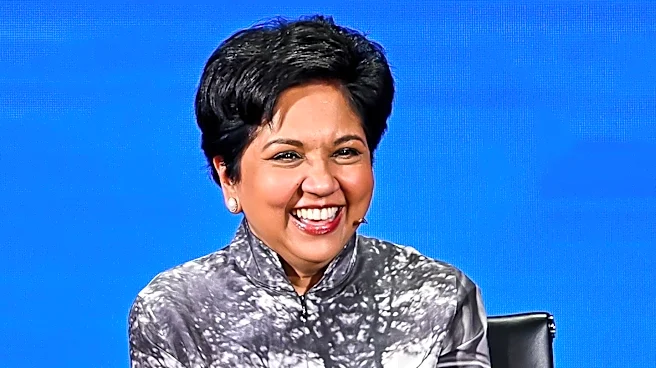
Indra Nooyi, former Chairman and CEO of PepsiCo, recently engaged in a conversation with Clarke Murphy, focusing on leadership development and the process of transforming an organization from a position of strength. Nooyi emphasized the importance of building
support for long-term change within a company. The discussion also touched upon the potential pitfalls of constant availability for leaders, suggesting that creating more space can empower teams and enhance leadership effectiveness. Furthermore, the conversation highlighted the critical role of trust in leadership teams for effective challenge, collaboration, and decision-making, especially under pressure. This dialogue is part of a broader exploration into how leaders can adopt a more intentional approach to their development and challenge conventional thinking about career progression.
Why It's Important?
Nooyi's insights are significant for U.S. businesses and leaders, particularly in an era of rapid change and evolving organizational structures. Her emphasis on transforming from a position of strength rather than decline offers a proactive model for corporate strategy, potentially influencing how American companies approach growth and adaptation. The discussion on leader availability and its impact on team empowerment underscores a shift towards more distributed leadership models, which can foster innovation and resilience within organizations. By highlighting the importance of trust, Nooyi points to a foundational element for effective corporate governance and team dynamics, crucial for navigating complex market conditions and maintaining competitive advantage in the U.S. business landscape. Her perspective can guide current and aspiring executives in developing more robust and adaptable leadership styles.
What's Next?
The ongoing discussions and insights from leaders like Indra Nooyi are expected to continue shaping leadership development programs and corporate strategies across the U.S. Businesses may increasingly focus on fostering environments where leaders can strategically delegate and empower their teams, moving away from models that demand constant availability. The emphasis on building trust within leadership teams suggests a future trend towards more collaborative and transparent decision-making processes. These principles are likely to be integrated into executive training and organizational development initiatives, aiming to prepare leaders for the challenges of 2027 and beyond. The insights also encourage a re-evaluation of traditional career progression paths, promoting lateral moves as valuable for broadening leadership skills.
Beyond the Headlines
Beyond the immediate implications for leadership development, Nooyi's perspectives touch upon deeper cultural shifts within corporate America. The idea that constant availability can limit impact challenges the long-held notion of 'always-on' leadership, suggesting a move towards more sustainable and strategic engagement. This could lead to a redefinition of productivity and effectiveness in high-level roles, potentially improving work-life balance for executives and fostering a healthier corporate culture. The focus on trust as a critical element for challenging and collaborating within leadership teams also highlights an ethical dimension, emphasizing integrity and psychological safety as cornerstones of effective governance. These shifts could contribute to more resilient and ethically sound business practices in the long term.