






What's Happening?
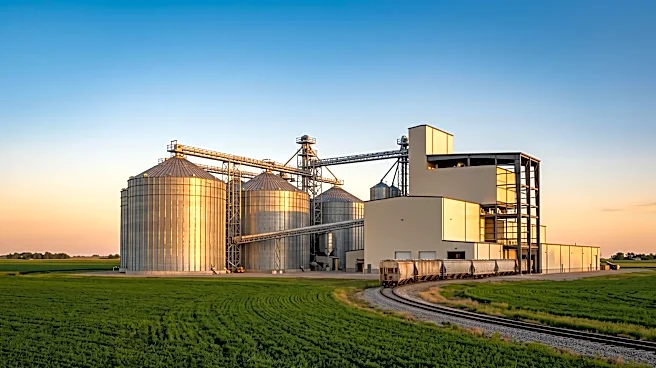
CHS, a Minnesota-based farmer-owned cooperative, has announced plans to build a new $700 million soybean processing facility in Evansville, Wisconsin. Groundbreaking for the facility is expected to occur soon, with an anticipated opening in the fall of
2028. Once fully operational, the plant will have the capacity to process 80 million bushels of soybeans annually. The facility is designed to include an in-plant loop track connected to Union Pacific rail, enabling it to receive up to 1,000 trucks daily. According to Wisconsin Governor Tony Evers, the project is a significant development for the state's agriculture and food processing sectors, which he considers essential for Wisconsin's future. CHS executive vice president of agriculture business John Griffith highlighted the strong demand across food, feed, and renewable fuel markets, along with policies encouraging domestic processing, as key drivers for the increased soybean processing capacity.
Why It's Important?
This $700 million investment by CHS represents a substantial boost to Wisconsin's agricultural economy and the broader U.S. soybean processing industry. The facility is projected to create approximately 80 jobs and significantly increase the cooperative's soybean processing capacity by over two-thirds when combined with its existing facilities in Minnesota. This expansion addresses the growing demand for soybean products in various sectors, including food, animal feed, and renewable fuels. The integration of a rail connection and the capacity to handle a large volume of trucks will enhance logistical efficiency for farmers and distributors. For Wisconsin, this project reinforces the state's position in the agricultural sector and contributes to economic development through job creation and increased agricultural output, benefiting local farmers and related industries.
What's Next?
CHS is expected to break ground on the new soybean processing facility in Evansville, Wisconsin, in the near future. Construction will proceed with the goal of opening the facility by the fall of 2028. During this period, CHS will likely focus on hiring for the approximately 80 new positions the facility is expected to create. The development will also involve coordination with Union Pacific for the rail connection and local authorities for infrastructure and operational permits. The increased processing capacity will allow CHS to better meet the rising demand for soybean products in various markets, including renewable fuels, which could see further growth due to supportive policies. The project's progress will be closely watched by agricultural stakeholders and local communities in Wisconsin.
Beyond the Headlines
The construction of this large-scale soybean processing facility has broader implications for the agricultural supply chain and environmental sustainability. The increased capacity for soybean processing directly supports the growing renewable fuel market, aligning with national efforts to reduce reliance on fossil fuels and promote cleaner energy sources. This could lead to a greater demand for soybean cultivation, potentially influencing land use and farming practices in the region. Furthermore, the facility's significant logistical capabilities, including rail and truck access, could transform regional transportation networks for agricultural goods. The project also highlights the ongoing trend of consolidating and expanding agricultural processing infrastructure to meet global demand and leverage technological advancements in the sector.