




What's Happening?
The Lowy Institute, through research cited in a Global Policy Journal article, has identified a significant vulnerability in the global critical mineral supply chain, particularly concerning the midstream refining process. Western and Indo-Pacific strategies,
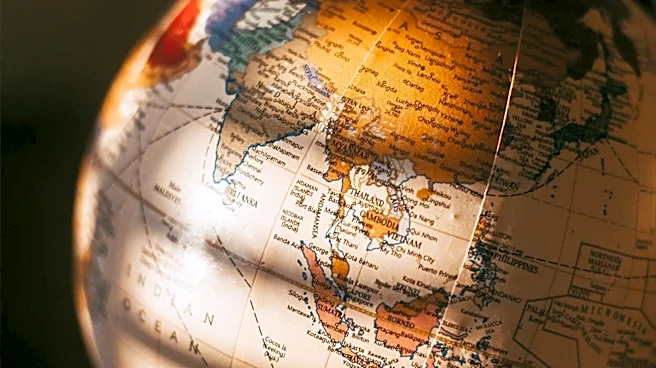
which have largely focused on forming multilateral 'buyer clubs' like the US-led Minerals Security Partnership (MSP) and bilateral frameworks such as Pax Silica, are facing a critical blind spot. While these initiatives aim to secure clean and uncorrupted supply chains for essential components in electric vehicles, wind turbines, and precision guidance systems, they overlook the concentrated midstream refining capacity in Asia. China currently controls over 65% of global midstream mineral refining, and key Southeast Asian hubs, including Indonesia, Malaysia, Vietnam, and Thailand, are deepening economic ties with the expanded BRICS+ network. This creates a bottleneck where raw mineral exports from Western allies and Global South producers are routed to BRICS-aligned facilities for processing, undermining sovereign strategic autonomy. The issue is compounded by material qualification barriers, where new refineries face a two-to-three-year certification process, giving established Chinese and BRICS-linked refiners a significant advantage due to their operational recipes, specialized labor, and cost efficiencies.
Why It's Important?
This concentration of critical mineral refining capacity in BRICS-aligned nations poses a substantial geoeconomic risk to the U.S. and its allies. The reliance on these processing hubs means that even if Western countries increase raw material extraction, the refined products essential for advanced technologies and defense systems remain subject to the influence of geopolitical rivals. This situation can hinder the U.S.'s ability to build resilient and secure supply chains for its green energy transition and national security needs. The material qualification barrier further exacerbates this, making it difficult for new, non-Chinese refineries to enter the market quickly, thus perpetuating the existing dependency. The Lowy Institute's research underscores that diplomatic alignment alone cannot substitute for physical industrial control, highlighting a fundamental misunderstanding of the critical mineral supply chain where 'minerals are not materials.' This could lead to increased costs, supply disruptions, and potential leverage for BRICS+ nations in global trade and political negotiations, impacting U.S. industries reliant on these critical minerals.
What's Next?
To address this midstream chokepoint, the Lowy Institute's research suggests a three-phased approach. First, establishing a Multilateral Critical Minerals Trust Fund, led by Global South economies and multilateral development banks, to de-risk upfront capital outlays for domestic processing facilities in producer states. This would reduce reliance on high-cost commercial debt. Second, implementing Bilateral Industrial Compacts and Qualification Labs, where regulators and critical mineral facilities allocate capital towards accredited material testing and qualification laboratories, potentially in partnership with universities and OEM manufacturers. This aims to compress the multi-year customer qualification barrier for non-Chinese refiners. Third, institutionalizing Multilateral Standards Under the WTO to establish transparent, non-discriminatory midstream processing standards. This would ensure fair access to refining technology and prevent arbitrary export restrictions, protecting both producer and consumer nations from geoeconomic coercion. These steps aim to build genuine resilience and sovereign industrial autonomy for countries currently dependent on BRICS-aligned processing hubs.
Beyond the Headlines
The issue of critical mineral processing extends beyond immediate supply chain concerns, touching upon broader themes of economic sovereignty, technological competition, and the effectiveness of international cooperation. The current reliance on a few dominant players in the midstream processing sector highlights a systemic vulnerability that could be exploited for geopolitical gain, potentially leading to resource nationalism and trade disputes. The challenge for the U.S. and its allies is not just to secure raw materials but to develop the industrial capacity to process them, which requires significant long-term investment and strategic planning. This situation also brings into question the efficacy of current international frameworks and the need for new models of collaboration that can address complex global supply chain interdependencies. The ethical implications of sourcing and processing these minerals, including environmental and labor standards, also become more pronounced as nations seek to diversify their supply chains and reduce reliance on potentially less transparent systems.