
What's Happening?
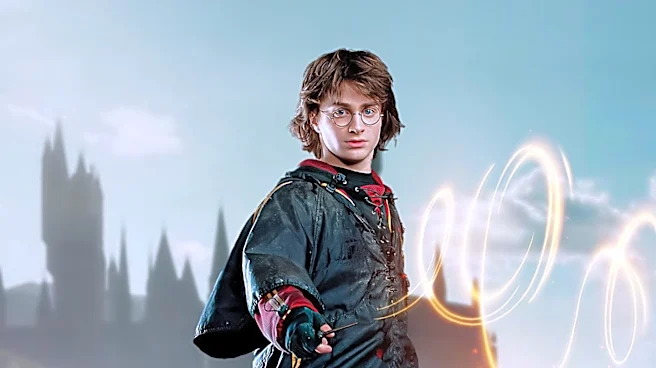
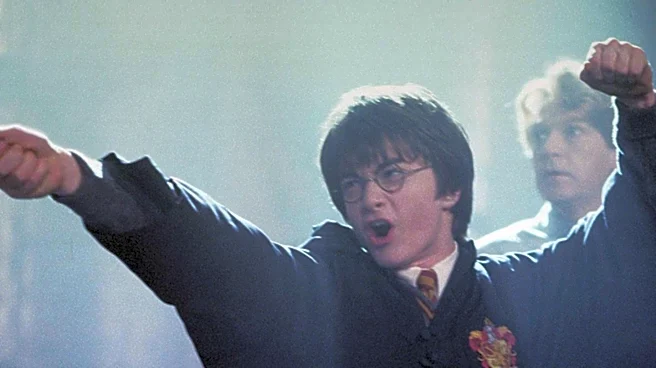
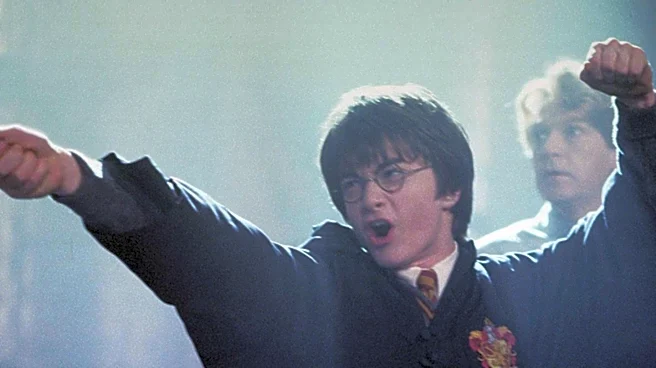
The first clip from the upcoming 'Harry Potter' TV series, set to premiere on HBO Max on Christmas Day, has garnered significant negative reactions from fans. Viewers have criticized the lighting, set design,
and pacing of the footage, which depicts Hogwarts students at a banquet with Headmaster Albus Dumbledore, played by John Lithgow. Many social media users described the visuals as 'ugly,' 'comically flat,' and lacking a sense of magic, with some comparing it unfavorably to the 2001 film adaptation directed by Christopher Columbus. Specific complaints include dimly lit scenes, a perceived lack of contrast, and a general absence of whimsy. The series is a new adaptation of J.K. Rowling’s bestselling books, with the first season covering 'Harry Potter and the Philosopher’s Stone.' The cast includes newcomers Dominic McLaughlin as Harry Potter, Arabella Stanton as Hermione Granger, and Alastair Stout as Ron Weasley, alongside established actors like Warwick Davis, Paapa Essiedu, Bel Powley, Janet McTeer, and Nick Frost.
Why It's Important?
The early negative reception for the 'Harry Potter' series on HBO Max is significant for several reasons. For Warner Bros. Discovery, the parent company of HBO Max, this series represents a major investment and a cornerstone of its streaming content strategy, aiming to capitalize on a globally beloved franchise. Initial fan backlash, particularly concerning fundamental aesthetic elements like lighting and set design, could impact viewership and critical reception upon release. The comparison to the original film series highlights the high expectations and nostalgic attachment fans have, making any deviation from perceived quality a point of contention. Furthermore, J.K. Rowling's controversial public statements on trans rights have already led to calls for boycotts, and now, aesthetic criticisms add another layer of challenge for the series to overcome in winning over its audience. The success or failure of this adaptation could influence future decisions regarding other beloved franchises being rebooted or adapted for streaming platforms.
What's Next?
The 'Harry Potter' series is scheduled to debut on HBO Max on December 25. Following the initial clip's release and subsequent fan criticism, the production team and HBO Max may face pressure to address these concerns, though significant changes to the already-produced content are unlikely before the premiere. Future promotional materials, such as full trailers, will be closely scrutinized by fans for any improvements or continuations of the criticized aesthetic choices. The series' performance in terms of viewership numbers and critical reviews after its release will be crucial. A strong performance could mitigate early backlash, while continued negative reception could impact the potential for future seasons or spin-offs within the 'Harry Potter' universe. The ongoing debate surrounding J.K. Rowling's views will also likely continue to influence public discourse around the series, regardless of its artistic merits.
Beyond the Headlines
The strong fan reaction to the 'Harry Potter' series' first clip underscores a broader trend in media consumption and franchise management: the immense power of established fan bases and their expectations. In an era of reboots and adaptations, creators face the delicate balance of honoring original source material and fan nostalgia while also bringing fresh perspectives. The criticism regarding the series' 'whimsyless' and 'flat' aesthetic points to a potential disconnect between modern production values and the magical, immersive quality fans associate with the Wizarding World. This situation also highlights the challenges of adapting beloved literary works for new visual mediums, where subjective interpretations of atmosphere and tone can lead to significant audience division. The debate extends beyond mere visual preferences, touching upon the very essence of what makes a story 'magical' for its audience, and how those intangible qualities are translated onto the screen in a way that resonates with a deeply invested global community.