


What's Happening?
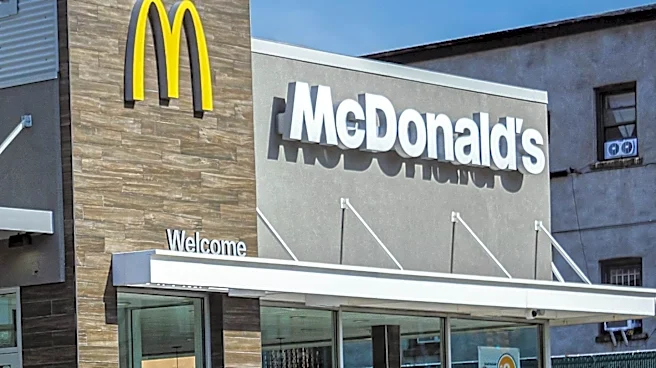
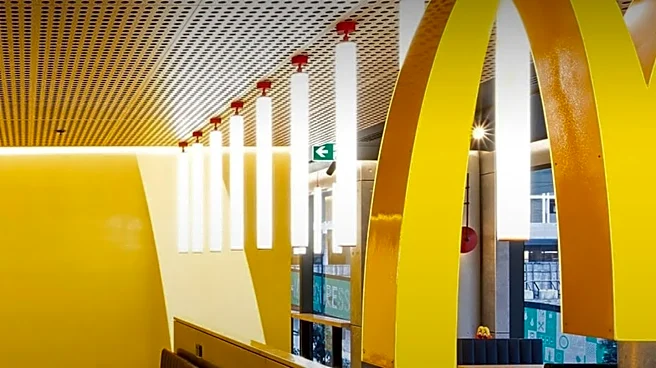
McDonald's Corporation's share price, currently at US$283.50, is facing investor scrutiny as the company embarks on a multibillion-dollar restaurant makeover plan. This initiative involves significant upgrades, reportedly costing close to US$800,000 per
store. While McDonald's has delivered a 27.0% share price gain over the past five years, the substantial near-term capital expenditure for these makeovers is prompting questions about the adequacy of current cash flows to support the present valuation. Investors are evaluating whether the anticipated long-term earnings power from these upgrades will justify the increased spending and the stock's premium price. The company's Discounted Cash Flow (DCF) model estimates future cash generation, projecting free cash flow to reach nearly $9.7 billion by 2030, but the DCF outcome currently sits below the stock's trading price.
Why It's Important?
This situation is important for investors and the broader U.S. business landscape as it highlights the challenges mature companies face in balancing growth investments with shareholder value. McDonald's significant investment in store makeovers reflects a strategic effort to modernize its brand and enhance customer experience, potentially boosting long-term revenue and profitability. However, the immediate financial outlay creates pressure on short-term cash flows and raises questions about the stock's valuation. If the makeover plan successfully translates into stronger cash generation, it could serve as a model for other established U.S. retailers looking to revitalize their physical presence. Conversely, if the returns on investment do not meet expectations, it could lead to investor dissatisfaction and a re-evaluation of similar capital-intensive strategies across the industry, impacting market sentiment for companies undertaking large-scale infrastructure improvements.
What's Next?
The market will closely monitor McDonald's financial performance in the coming quarters to assess the impact of the restaurant makeover plan on its cash flows and earnings. Investors will be looking for clear indications that the substantial investment is beginning to yield the anticipated long-term benefits, such as increased customer traffic, higher sales, and improved operational efficiency. The company's ability to demonstrate a positive return on investment from these upgrades will be crucial in justifying its current share price and maintaining investor confidence. Future financial reports and management commentary on the progress and effectiveness of the makeover initiative will be key in shaping market perception and potentially influencing the stock's trajectory. The success or challenges faced by McDonald's in this endeavor could also set precedents for other U.S. companies considering similar large-scale capital expenditure projects.
Beyond the Headlines
Beyond the immediate financial implications, McDonald's extensive makeover plan reflects a broader trend in the U.S. retail and food service sectors: the imperative to adapt to evolving consumer expectations and competitive pressures. In an era where dining experiences and digital integration are increasingly important, physical store upgrades are not merely cosmetic but strategic necessities. This investment signifies McDonald's commitment to remaining a dominant player by enhancing its physical infrastructure and potentially integrating new technologies to streamline operations and improve customer engagement. The success of this strategy could influence how other U.S. fast-food chains and retailers approach their own modernization efforts, potentially leading to a wave of similar investments across the industry. It also underscores the ongoing challenge for established brands to innovate while managing the financial demands of such large-scale transformations, highlighting the delicate balance between tradition and progress in a dynamic market.