



What's Happening?
Matcha, traditionally known for its use in lattes, is increasingly being incorporated into a diverse range of beverages, including cocktails and unique cafe offerings. This trend signifies a shift in modern beverage culture, moving beyond conventional
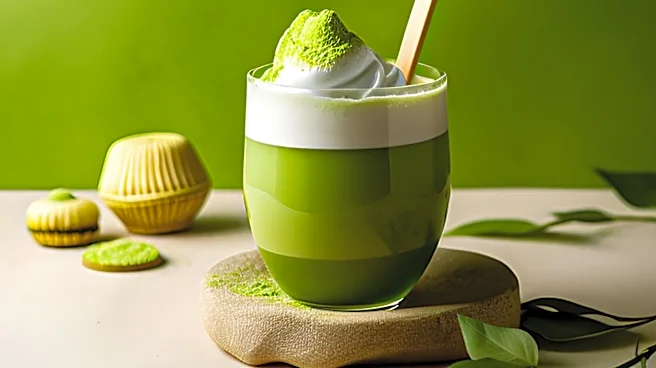
matcha preparations. Examples include the Matcha Margarita, which blends matcha with tequila and lime, and the Matcha Colada, combining matcha with tropical flavors. Specialty food publications highlight the growing presence of matcha in cold drinks, such as matcha hojicha and premium matcha powders for cafe menus. The drinks industry is also exploring novel combinations like iced banana miso matcha, iced tahini pistachio matcha cloud drinks, and 'dirty matcha,' which is a blend of matcha and espresso. This expansion showcases matcha's versatility and its ability to integrate into various flavor profiles, from citrus-led to creamy and even coffee-based concoctions.
Why It's Important?
This evolution of matcha into a broader beverage ingredient holds significant implications for the U.S. food and drink industry. For businesses, it presents new opportunities for product innovation and menu diversification, potentially attracting a wider customer base beyond traditional tea enthusiasts. The introduction of matcha into cocktails, for instance, could boost sales in bars and restaurants by offering unique, health-perceived options. Cafes can capitalize on the demand for personalized and unexpected matcha-based beverages, catering to consumers seeking both wellness and novel taste experiences. This trend also reflects a broader consumer interest in functional ingredients and customizable drinks, pushing establishments to adapt their offerings. The increased demand for premium matcha and hojicha powders suggests a growing market for high-quality ingredients, benefiting suppliers and producers. Ultimately, this trend could lead to a more dynamic and competitive beverage landscape, with businesses vying to create the next popular matcha-infused drink.
What's Next?
The continued integration of matcha into diverse beverage categories is expected to drive further innovation in the U.S. food and drink market. Consumers can anticipate seeing more experimental matcha-based drinks on menus, ranging from sophisticated cocktails to health-conscious smoothies and coffee hybrids. The emphasis on customization and unique flavor combinations will likely lead to a proliferation of seasonal and limited-edition matcha offerings. Businesses, particularly cafes and bars, will continue to experiment with matcha to meet evolving consumer preferences for both novel and functional beverages. This could also spur increased research and development into new matcha-compatible ingredients and preparation methods. The trend suggests that matcha will solidify its position as a versatile and sought-after ingredient, moving beyond its niche status to become a mainstream component in the modern beverage industry.
Beyond the Headlines
The expanding role of matcha in the U.S. beverage scene reflects deeper cultural and lifestyle shifts. Its popularity is partly driven by a growing consumer focus on health and wellness, as matcha is perceived to offer various health benefits. The aesthetic appeal of matcha's vibrant green color also plays a significant role, particularly in the age of social media, where visually appealing drinks are highly shareable. This trend highlights a broader willingness among consumers to explore global flavors and ingredients, moving beyond traditional Western palates. The fusion of matcha with diverse culinary elements, such as miso and tahini, indicates a sophisticated and adventurous approach to food and drink. Furthermore, the demand for premium and customizable options underscores a desire for personalized experiences and high-quality ingredients, influencing sourcing and production practices across the industry. This cultural embrace of matcha signifies a more adventurous and health-conscious consumer base.