


What's Happening?
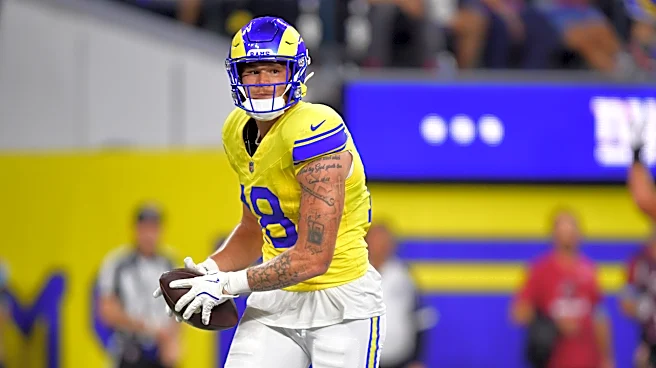
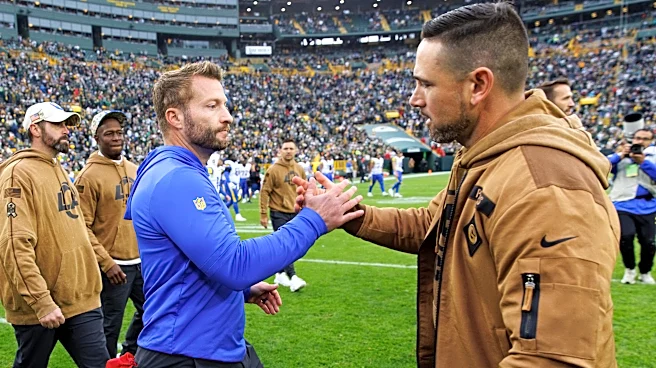
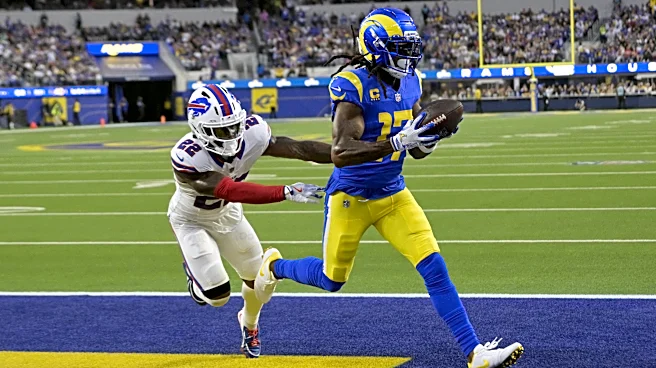
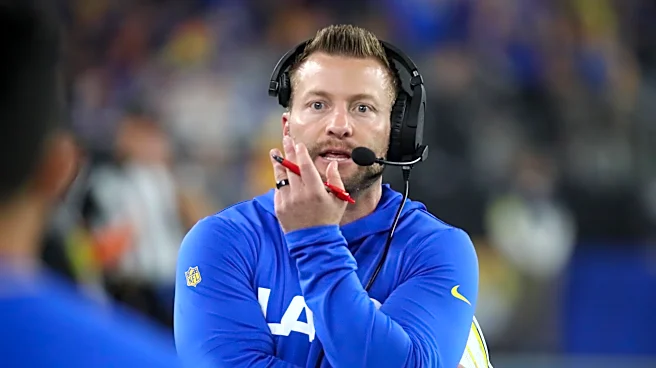
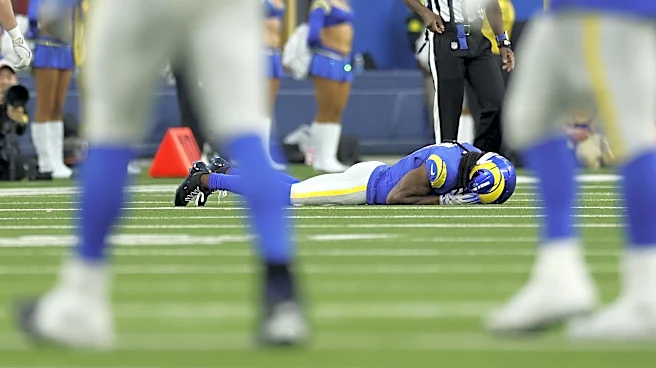
Los Angeles Rams head coach Sean McVay has significantly altered the team's offensive strategy due to numerous player injuries. With key offensive playmakers like Davante Adams (hamstring) and Puka Nacua (knee surgery) sidelined, and tight end Terrance
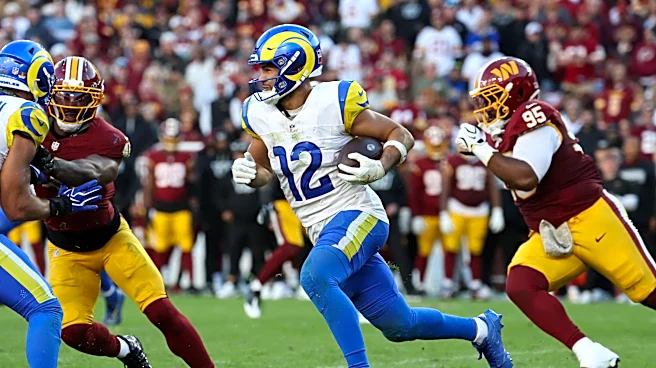
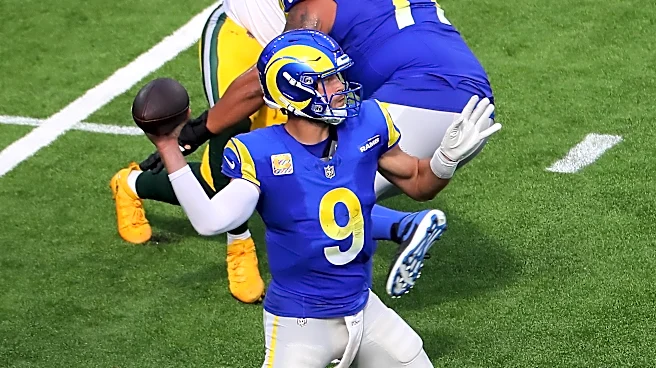
Ferguson also out, McVay and his offensive assistants, Nate Scheelhaase and Kliff Kingsbury, have implemented creative new formations. In a recent game against the Arizona Cardinals, the Rams utilized 13 personnel (one running back, three tight ends) on 63.5% of plays, a high for McVay's tenure. More notably, they introduced 20 personnel (two running backs, three wide receivers) on 17 plays, a formation not used previously that season. This new approach resulted in 197 passing yards and a touchdown, including a screen-pass score by Xavier Smith, without any rushing attempts from this package by Kyren Williams or Blake Corum. Quarterback Matthew Stafford's ability to read defenses and adapt to these changes is cited as crucial to the offense's continued success.
Why It's Important?
This strategic shift by the Rams highlights the critical role of adaptability and quarterback intelligence in professional football, especially when facing significant roster challenges. McVay's willingness to deviate from established playbooks and innovate under pressure demonstrates a coaching philosophy that prioritizes maximizing available talent over rigid adherence to pre-set schemes. Matthew Stafford's role as an 'extension of the coaching staff' underscores the increasing demand for quarterbacks who can not only execute plays but also diagnose defenses and make real-time adjustments. This approach could influence other NFL teams to invest more in versatile quarterbacks and coaching staffs capable of dynamic in-season adjustments, potentially leading to more unpredictable and exciting offensive schemes across the league. The success of this reinvention also showcases how teams can remain competitive even when battling extensive injury lists, offering a blueprint for resilience in a physically demanding sport.
What's Next?
The Rams are expected to continue refining their reinvented offense, leveraging Matthew Stafford's expertise and McVay's creative play-calling. The team's success with new formations suggests they will likely integrate these elements further into their playbook, making them less predictable for opposing defenses. Future games will test the long-term sustainability of these adjustments and whether other teams can effectively counter the Rams' evolving strategies. The ongoing collaboration between McVay and Stafford will be key to maintaining offensive efficiency and potentially securing a strong playoff run. The team's ability to continue winning despite injuries could also influence player acquisition strategies in the offseason, potentially emphasizing versatility and football IQ in new recruits.
Beyond the Headlines
The Rams' offensive transformation goes beyond mere tactical adjustments; it reflects a deeper philosophical shift in how NFL teams might approach roster management and game planning. In an era where player health and injury rates are constant concerns, the ability to pivot and innovate with available personnel becomes a significant competitive advantage. This situation also highlights the intangible value of an experienced quarterback like Stafford, whose mental acuity and understanding of the game allow for complex, on-the-fly changes that younger quarterbacks might struggle with. The success of this approach could lead to a broader re-evaluation of how player development focuses on mental aspects of the game, alongside physical prowess. Furthermore, it challenges the notion that a team's success is solely dependent on its star players, demonstrating that strategic coaching and intelligent execution can overcome significant personnel setbacks.