

What's Happening?
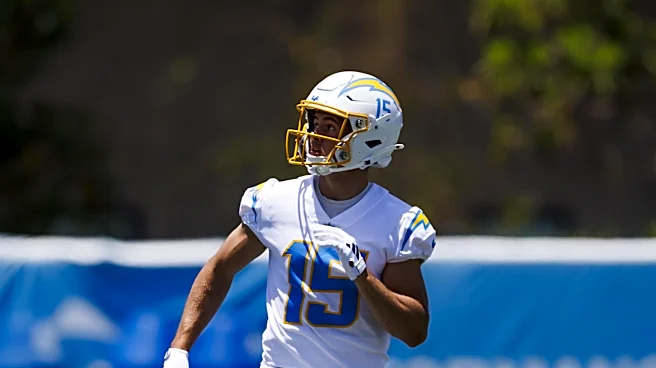
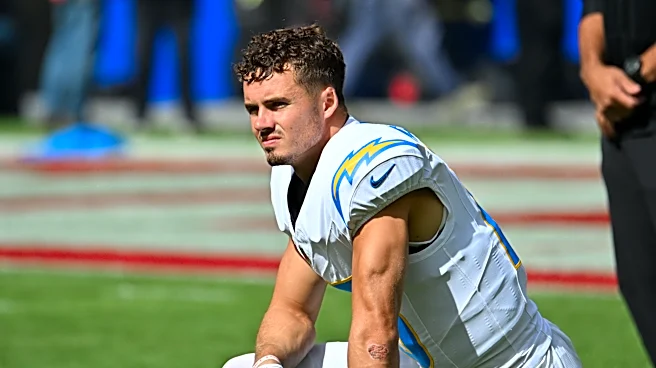
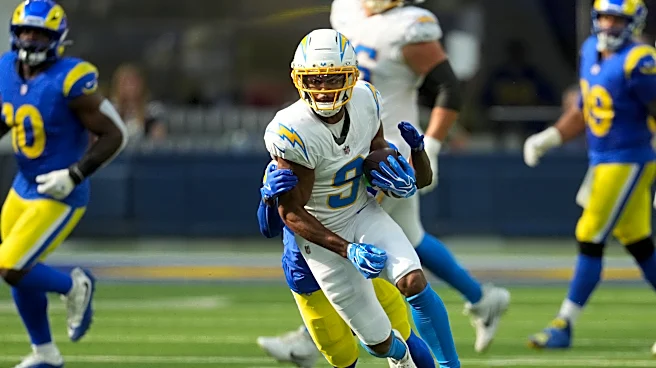
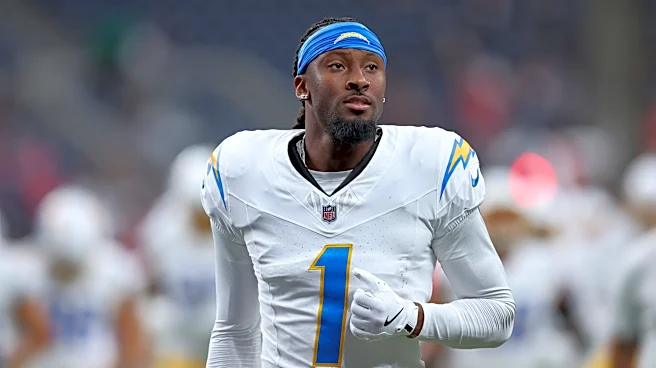
Los Angeles Chargers wide receiver Tre' Harris delivered a career-best performance in Week 10, becoming the focal point of the team's passing game due to the absence of top receiver Ladd McConkey. Harris caught five passes for 86 yards, marking his highest
receiving yardage in a single game. McConkey was inactive for the game due to a back injury, adding to a season plagued by various ailments including a rib, foot, and concussion. In McConkey's absence, Harris has consistently seen an increased role, transitioning from playing in 11 personnel to being utilized in all offensive situations. The Chargers have also experimented with several players in the slot receiver position throughout the season, including Brenen Thompson, Derius Davis, Theo Wease Jr., and KeAndre Lambert-Smith, as they navigate McConkey's recurring health issues. The team's reliance on the run game in Week 10 also contributed to Harris's prominent role in the passing attack.
Why It's Important?
Tre' Harris's emergence is significant for the Chargers as it highlights the team's depth at wide receiver and their ability to adapt to key player injuries. McConkey's persistent injury issues have created an opportunity for other receivers to step up, and Harris's performance demonstrates his potential to be a reliable target. This development could influence the Chargers' offensive strategy, potentially leading to a more diversified passing attack even when McConkey returns. For fantasy football managers, Harris's increased usage and production make him a potential flex option, especially if McConkey continues to face health setbacks or if Harris can secure more consistent playing time in 12 personnel formations. The team's willingness to lean on different players underscores a strategic flexibility that could be crucial for their performance in the latter half of the season.
What's Next?
The immediate future for Tre' Harris will depend on Ladd McConkey's recovery and availability. If McConkey's back injury or other recurring issues keep him sidelined, Harris is likely to continue seeing an expanded role in the Chargers' offense. The team will need to assess McConkey's long-term health and determine if Harris can consistently maintain his recent level of production. The Chargers may also continue to rotate other receivers in the slot position to find the most effective combination. For Harris, the challenge will be to solidify his position and demonstrate that his career-best game was not an anomaly but a sign of his growing capability. His performance could also influence future roster decisions, particularly regarding the depth chart at wide receiver.
Beyond the Headlines
The situation with the Chargers' wide receiver corps reflects a broader trend in the NFL where player durability significantly impacts team performance and strategic planning. Teams often need to develop robust depth charts to mitigate the effects of injuries to star players. Harris's rise from a rotational player to a key contributor in a crucial game highlights the 'next man up' mentality prevalent in professional sports. This scenario also underscores the unpredictable nature of player value in fantasy football, where injuries to top-tier players can create unexpected opportunities for others. The Chargers' ongoing adjustments to their receiving options could also provide insights into their long-term player development strategies and how they manage player health versus on-field production.