








What's Happening?
GD Culture Group (GDC) reported a net loss of $52.16 million for the second quarter of 2026, a substantial increase from the $1.5 million loss in the same period last year. The basic and diluted loss per share from continuing operations widened to $53.40,
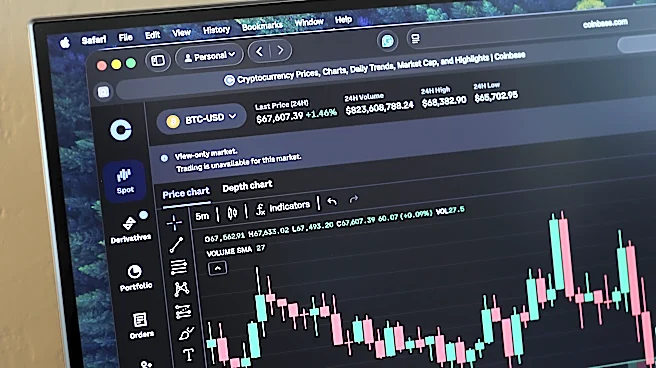
compared to $19.00 in the prior-year quarter, on a split-adjusted basis. The company's revenue remained at $0, reflecting its ongoing strategic pivot towards an interactive narrative entertainment platform that has not yet launched commercially. The primary driver for this widening loss was a non-cash fair-value accounting adjustment on the company's Bitcoin (BTC) treasury. The company's Bitcoin holdings, which stood at 7,500 BTC, saw a non-cash unrealized loss of approximately $211.8 million, as their fair value declined from an original cost of $842 million to $451.2 million as of June 30. Management stated that available liquidity is sufficient to cover obligations for at least the next 12 months.
Why It's Important?
This report from GD Culture Group highlights the significant financial impact that Bitcoin's price volatility can have on companies holding substantial digital asset reserves. For GDC, the value of its Bitcoin treasury has become the single largest variable influencing its quarterly results, overshadowing its operational performance. This situation underscores the risks and opportunities associated with corporate Bitcoin adoption, demonstrating how market fluctuations in a highly volatile asset can lead to considerable non-cash losses, even if operating cash flows remain stable. The reliance on at-the-market (ATM) equity sales to fund operations, which has significantly increased the company's share count, also raises concerns about shareholder dilution. This case serves as a cautionary tale for investors and other companies considering similar treasury strategies, emphasizing the need for robust risk management and clear communication regarding the impact of digital asset holdings on financial statements.
What's Next?
Investors will need to closely monitor Bitcoin's price movements, as it will continue to be the dominant factor in GDC's quarterly financial results. The company's ability to manage its liquidity and its future financing activities, particularly any changes to its Bitcoin reserve strategy, will be critical. The commercial launch and subsequent performance of its interactive narrative entertainment platform will also be a key indicator of its ability to generate revenue independent of its digital asset holdings. Given the high volatility and significant short interest in GDC's stock, investor sentiment will likely remain divided between those focused on the long-term value of its Bitcoin treasury and those concerned about dilution and operational challenges. Regulatory bodies may also take note of such cases, potentially influencing future accounting standards or disclosure requirements for companies with significant cryptocurrency exposure.
Beyond the Headlines
The experience of GD Culture Group illustrates a broader challenge in the evolving landscape of corporate finance: how to account for and manage highly volatile, non-traditional assets like Bitcoin. The distinction between non-cash unrealized losses and operational performance becomes crucial, yet it can be easily obscured by headline figures. This situation prompts a deeper discussion about the suitability of current accounting standards for digital assets and the need for greater transparency in financial reporting for companies with significant crypto exposure. Furthermore, it highlights the speculative nature of some corporate Bitcoin strategies, where the primary driver of financial performance is asset appreciation rather than core business operations. This could lead to increased scrutiny from investors and regulators regarding the fundamental business models of companies that heavily rely on digital asset treasuries.