






What's Happening?
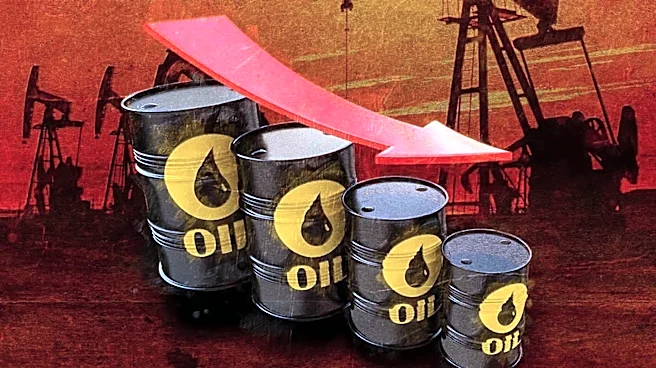
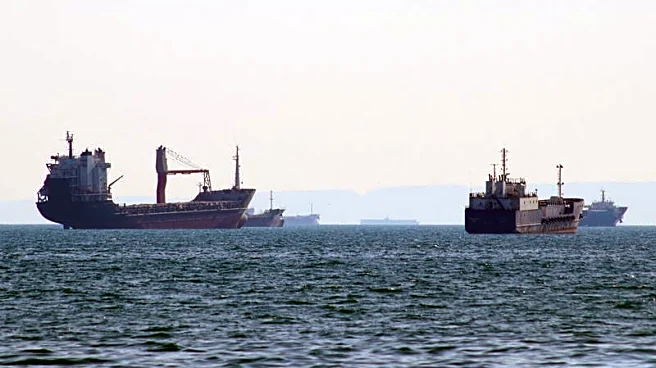
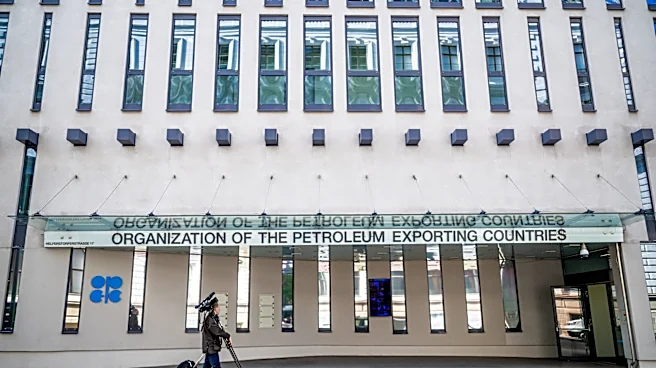
Global crude oil prices have fallen below $92 per barrel, with Brent crude at $91.55 and WTI at $84.95, as expectations of increased supply from the Middle East outweigh concerns over regional tensions and tanker attacks. The Organization of the Petroleum
Exporting Countries (OPEC) recently held an online meeting to assess the maximum sustainable production capacity of its member countries. This assessment is crucial for determining future production allocations within the broader OPEC+ alliance, which includes non-OPEC countries like Russia. The OPEC+ group is scheduled to meet on November 29 to finalize its production strategy for 2027. Despite ongoing geopolitical risks, market sentiment is increasingly focused on anticipated supply availability, with the International Energy Agency (IEA) projecting a return to a global oil market surplus in the fourth quarter of 2026.
Why It's Important?
The decline in crude oil prices and the impending OPEC+ meeting hold significant implications for the U.S. economy and consumers. Lower oil prices can translate to reduced costs at the pump, potentially easing inflationary pressures and benefiting industries reliant on transportation. However, a sustained drop in prices could negatively impact U.S. domestic oil producers, potentially leading to reduced investment and job losses in the energy sector. The U.S. Strategic Petroleum Reserve (SPR) has also seen its inventories fall to 276.4 million barrels, the lowest since August 1982, following a release agreement. This reduction in strategic reserves could raise concerns about energy security in the long term, especially if global supply dynamics become volatile. The decisions made by OPEC+ on November 29 will directly influence global oil supply and, consequently, U.S. energy costs and economic stability.
What's Next?
The primary immediate next step is the OPEC+ meeting scheduled for November 29, where the alliance will finalize its production strategy for 2027. The outcome of this meeting will dictate global oil supply levels and could significantly impact crude oil prices. Oil traders and analysts will closely monitor the decisions made, particularly regarding production quotas for individual member countries. The assessment of maximum sustainable production capacity, which was a key topic in OPEC's recent online meeting, will heavily influence these negotiations. Furthermore, the ongoing geopolitical risks in the Middle East, despite their current diminished impact on prices, remain a factor that could quickly shift market sentiment and supply concerns. The U.S. Department of Energy will continue to monitor its Strategic Petroleum Reserve levels and global oil market developments.
Beyond the Headlines
The current market dynamics highlight a complex interplay between geopolitical stability, global demand, and the strategic decisions of major oil-producing nations. While the immediate focus is on supply and demand, the long-term implications of a fluctuating oil market extend to global energy transition efforts and the stability of oil-dependent economies. The U.S.'s reliance on its Strategic Petroleum Reserve underscores the importance of energy independence and diversification. The geopolitical risk premium, though currently less influential, could resurface rapidly, demonstrating the inherent volatility in the oil market. The decisions by OPEC+ not only affect immediate prices but also shape investment decisions in renewable energy and alternative fuel sources, influencing the pace of global decarbonization and the future energy landscape.