







What's Happening?
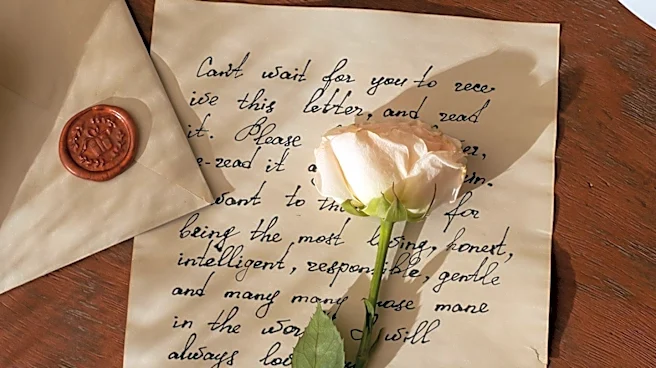
NPR's 'Book of the Day' is featuring 'The Correspondent,' an epistolary novel by Virginia Evans. The book has become a significant success for its unique approach to storytelling, presenting a life primarily through letters. The protagonist, Sybil Van
Antwerp, is introduced in her 70s and guides readers through her various correspondences, which include notable figures like Joan Didion and Ann Patchett. The novel explores the value of correspondence and how Sybil's clever prose might conceal as much as it reveals. Author Virginia Evans discussed the book's themes and its impact on the letter-writing industry with Robin Young on 'Here and Now.'
Why It's Important?
The success of 'The Correspondent' highlights a renewed interest in epistolary novels and the art of letter writing in an increasingly digital age. In a world dominated by instant communication, a book that delves into the depth and nuance of written correspondence offers a refreshing perspective on human connection and storytelling. This novel's popularity suggests a cultural yearning for more deliberate and reflective forms of communication, contrasting with the brevity and immediacy of modern digital interactions. For the literary world, it demonstrates the enduring appeal of classic narrative structures and their ability to explore complex characters and themes. The discussion around the book's impact on the 'letter-writing industry' also points to a potential resurgence or appreciation for traditional forms of communication, which could influence publishing trends and consumer interests.
What's Next?
The feature on NPR's 'Book of the Day' is likely to boost sales and readership for 'The Correspondent,' further solidifying its status as a notable literary work. The discussion with author Virginia Evans could inspire other writers to explore epistolary formats or themes related to communication and personal history. This renewed attention might also spark a broader cultural conversation about the role of letters and long-form writing in contemporary society, potentially leading to workshops, clubs, or even a niche market for artisanal stationery and letter-writing supplies. Publishers may take note of the book's success, potentially seeking out more novels that utilize unique narrative structures or explore nostalgic forms of communication.
Beyond the Headlines
Beyond its literary merit, 'The Correspondent' delves into the profound implications of how we document and remember our lives. By presenting a life through letters, the novel implicitly questions the reliability of personal narratives and the selective nature of self-representation. Letters, unlike spontaneous conversations, are curated and crafted, offering a filtered version of reality. This raises ethical and philosophical questions about authenticity, memory, and the construction of identity through written words. The book's success in an era of fleeting digital messages also suggests a deeper cultural longing for permanence and tangibility in personal records, highlighting the ephemeral nature of much of our modern communication. It encourages readers to consider what is lost when the art of letter writing fades and what unique insights it offers into the human condition.