
What's Happening?
Panama is actively pursuing a strategy to establish itself as a primary base for international associations in Latin America, moving beyond merely hosting international meetings. This initiative, known
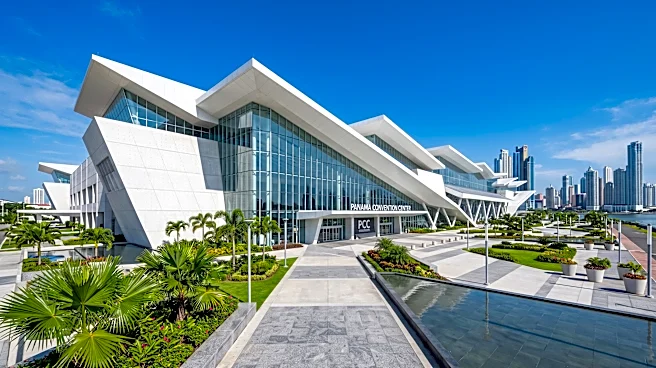
as the Panama Association Hub, aims to encourage these organizations to set up regional offices within the country. The International Congress and Convention Association (ICCA) has been advising Panama on this endeavor for approximately three years, which has involved significant changes to Panama's legislative framework. Panama President José Raúl Mulino emphasized that this is a "strategic decision of the state," not merely a tourism aspiration. The recent ICCA congress in Panama City drew 1,293 delegates from 80 countries, exceeding attendance expectations despite global uncertainties. The Panama Convention Center, which hosted the congress, has seen substantial growth, with over 400 events in its first five years and 85 booked or in final negotiation for 2027.
Why It's Important?
This strategic shift by Panama could significantly impact the landscape of international association operations in Latin America. By offering a permanent base, Panama aims to attract a more stable and long-term source of business, fostering deeper engagement with global organizations. The initiative leverages Panama's existing infrastructure, such as the City of Knowledge, which provides a network of universities, research institutions, and businesses, offering potential collaboration opportunities for associations. If successful, this could lead to increased foreign investment, job creation, and knowledge transfer within Panama. For international associations, Panama's strong air connectivity, highlighted by industry experts like Sarah Timm, presents a compelling advantage for regional operations, potentially streamlining logistics and reducing travel costs for their members and staff across the Americas.
What's Next?
ICCA will continue to advise Panama as it works to recruit international associations to establish regional offices. The focus will be on converting the positive impressions from the recent congress into long-term commitments. Panama will likely continue to promote its advantages, including its air connectivity and the collaborative environment offered by the City of Knowledge. The Panama Convention Center is actively pursuing international association congresses and specialized exhibitions in sectors like technology, healthcare, and sustainability, with financial incentives available for qualifying organizers. The success of this initiative will depend on Panama's ability to demonstrate the value proposition of establishing a permanent presence, beyond just hosting events, and to overcome any existing lack of awareness among association decision-makers.
Beyond the Headlines
The Panama Association Hub initiative represents a sophisticated approach to economic development, moving beyond traditional tourism to cultivate a knowledge-based economy. By integrating international associations into its national fabric, Panama could enhance its global standing as a center for intellectual exchange and professional development. This strategy could also lead to a 'brain gain,' attracting skilled professionals and fostering innovation within the country. The legislative changes undertaken to support this initiative suggest a long-term commitment to creating a favorable environment for international organizations, potentially setting a precedent for other nations in the region seeking to attract similar investments. The emphasis on repeat business and long-term partnerships indicates a mature understanding of sustainable economic growth.