




What's Happening?
Digital Realty holds a dominant position in Seattle's data center market, particularly through its ownership of approximately 99% of the Westin Building Exchange. This 34-story tower, originally built in 1981 as the headquarters for Westin Hotels, was
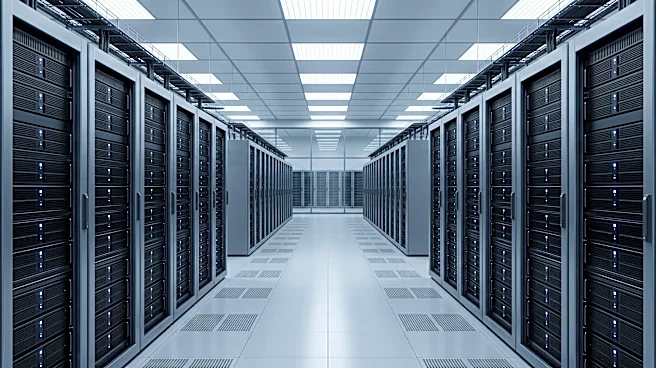
converted into a carrier hotel in 1995 and has since become the primary interconnection hub for the Pacific Northwest. Digital Realty acquired half of the building in 2006 and purchased most of the remaining stake in 2020. The Westin Building Exchange houses multiple data centers, including Digital Realty's SEA10, Equinix SE2, DataBank SEA1, and Hivelocity Seattle 1, along with the Seattle Internet Exchange and the Pacific Northwest Gigapop. It serves as a critical link for trans-Pacific cables, connecting Canada, Alaska, and Asia. Additionally, Digital Realty operates SEA11 at 2020 Fifth Avenue in Seattle, further solidifying its presence in the region.
Why It's Important?
Digital Realty's near-complete ownership of the Westin Building Exchange is crucial for the U.S. digital infrastructure, particularly for the Pacific Northwest. This building is not just a data center; it's a vital nerve center for internet traffic, facilitating high-speed data exchange across the Pacific and within North America. Its role as a major interconnection hub means that businesses, cloud providers, and telecommunications companies rely on its infrastructure for reliable and low-latency connectivity. For the U.S. economy, this concentration of digital infrastructure in Seattle supports the region's tech industry, including major players like Amazon, whose nearby campus is even warmed by heat from the data centers. The Westin Building Exchange's strategic importance ensures that the U.S. maintains a strong gateway for international data, which is essential for global commerce, communication, and technological innovation. Digital Realty's control over such a critical asset gives it significant influence over the region's digital ecosystem and its ability to attract and support data-intensive businesses.
What's Next?
Digital Realty will likely continue to leverage its dominant position in the Westin Building Exchange to attract more tenants and expand its service offerings. The company's focus will remain on providing robust colocation, interconnection, and related digital infrastructure solutions. Given the increasing demand for data processing and storage, particularly with the rise of AI and cloud computing, Digital Realty may invest further in upgrading the building's capabilities and expanding its capacity. The company's operations in Seattle, including SEA10 and SEA11, will continue to be key components of its broader network. Future developments could also involve strategic partnerships with other tech companies and service providers to enhance the ecosystem within the Westin Building Exchange. The ongoing evolution of data center technology and the need for greater energy efficiency will also drive continuous innovation and investment in the facility.
Beyond the Headlines
The Westin Building Exchange exemplifies the critical, yet often unseen, infrastructure that underpins the modern digital world. Its transformation from a hotel headquarters to a global internet hub highlights the dynamic nature of urban real estate and its adaptation to technological demands. The concentration of internet exchange points and data centers in such a facility creates a powerful network effect, making it an indispensable node in the global internet fabric. However, this concentration also presents potential vulnerabilities, including physical security risks and the impact of localized power outages or natural disasters on a vast network. Digital Realty's stewardship of this asset carries a significant responsibility for maintaining the resilience and security of a substantial portion of U.S. and international internet traffic. The innovative use of waste heat from data centers to warm Amazon's campus also points to a future where digital infrastructure is more integrated with urban planning and sustainability efforts, showcasing how technological advancements can lead to more efficient resource utilization.