


What's Happening?
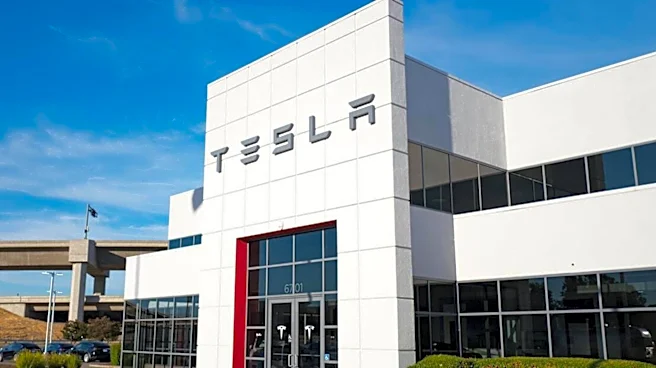
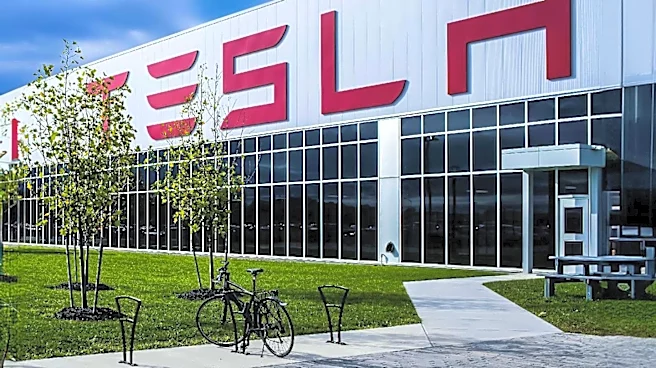
Tesla and SpaceX are actively engaged in merger negotiations, with both companies establishing special committees of independent directors to evaluate potential proposals. Tesla's committee is led by Board Chair Robyn Denholm and advised by Evercore,
while SpaceX's committee includes Roelof Botha and Randy Glein, with Morgan Stanley and Goldman Sachs as financial advisors. The discussions are centered on an all-stock merger plan, focusing on business synergies, valuation, and the share exchange ratio. While progress has been reported, no agreement on transaction terms has been reached, and significant uncertainty remains. Due to potential conflicts of interest, Elon Musk, CEO of both companies, is not directly participating in these formal negotiations. The potential merger could create a combined entity with an estimated market capitalization of $3.28 trillion, potentially making it the largest corporate merger in global history. The Tesla shareholder meeting on December 3 will be closely watched for any signals regarding the merger timeline, valuation, and post-merger governance.
Why It's Important?
This potential merger holds significant implications for the technology and aerospace industries, as it could integrate a vast array of businesses under one umbrella, from AI models and computing infrastructure to electric vehicles, satellite communications, and humanoid robots. Such an integration could lead to enhanced technical synergies between SpaceX's Grok, AI data centers, and Starlink with Tesla's FSD, Robotaxi, and Optimus. Furthermore, the merger could consolidate Elon Musk's control, potentially giving him majority voting rights in the combined entity, which would significantly influence long-term strategy and investment directions. For ordinary shareholders, this could mean a decline in their influence over major corporate decisions. The merger could also accelerate SpaceX's inclusion in the S&P 500, attracting substantial passive capital and impacting capital allocation within major U.S. stock indices.
What's Next?
The market is keenly awaiting further signals regarding the merger, particularly at Tesla's upcoming shareholder meeting on December 3. Key areas of focus include the merger timeline—whether an agreement can be reached by year-end or if negotiations will extend into 2027. Investors will also be looking for details on transaction valuation, the share exchange ratio, and which company will be the acquirer. Another critical aspect is the post-merger governance structure, specifically whether Musk will secure majority voting rights. Regulatory risks, especially concerning national security given SpaceX's involvement in U.S. defense contracts and Tesla's significant operations in China, will also be under scrutiny. The ultimate success of the merger will depend on whether the incremental value created by integration outweighs the costs of equity dilution, governance risks, and substantial capital expenditures.
Beyond the Headlines
Beyond the immediate financial and operational implications, this potential merger raises profound questions about corporate governance and the concentration of power. If Musk gains majority voting control, it could set a precedent for how founders maintain influence over vast, diversified conglomerates. The integration of such disparate yet technologically advanced sectors—space exploration, artificial intelligence, automotive, and energy—could redefine industrial ecosystems, potentially leading to unprecedented innovation but also raising concerns about monopolistic tendencies. The regulatory landscape will be crucial, as authorities will need to navigate complex issues related to national security, market competition, and data privacy across such a broad and influential entity. The ethical implications of combining AI development with autonomous systems and space technology under a single, highly centralized leadership will also be a significant long-term consideration.