





What's Happening?
The fourth season premiere of Showtime's 'Yellowjackets,' titled 'Hivemind,' has been met with a critical review, suggesting the series is experiencing diminishing returns. Originally praised for its blend of survival horror, social hierarchy commentary,
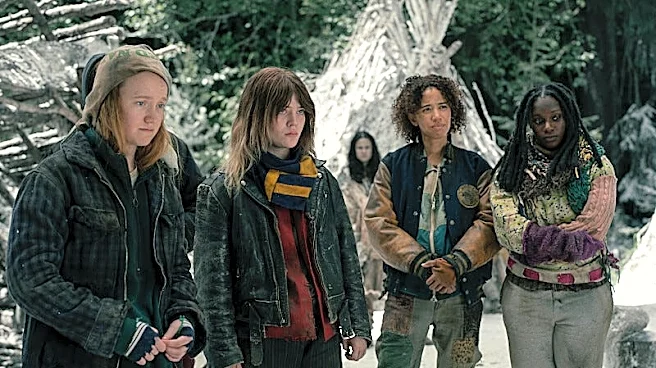
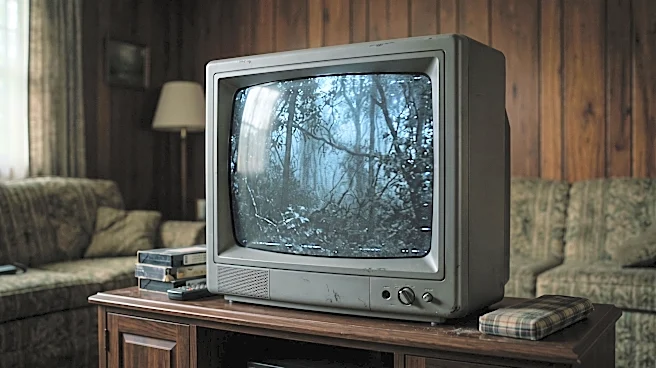
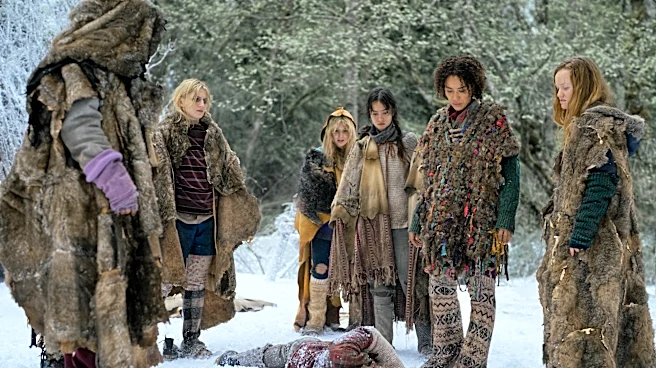
and trauma manifestations, the show's subsequent seasons have struggled to maintain the potency of its initial premise. The premiere episode depicts the long-awaited rescue of the plane crash survivors in 1998, shown through TV news announcements. However, the review notes that the show quickly reverts to previous habits, such as relying on needle-drop montages instead of substantive scenes for character processing. The present-day storyline picks up after Melissa's murder of Van, with Tai and Misty distrusting Shauna and plotting against her. Shauna herself is portrayed with surface-level anger, lacking nuance or pathos, as she has alienated her husband Jeff and daughter Callie. The review also criticizes the introduction of a new side plot detailing events just before the rescue, deeming it unnecessary filler that detracts from more crucial post-rescue narratives.
Why It's Important?
This critical assessment of 'Yellowjackets' Season 4 is important for several reasons. For Showtime, it signals potential audience dissatisfaction and a decline in critical acclaim for one of its flagship original dramas. A show losing its narrative coherence and compelling nature can lead to decreased viewership and subscriber churn, impacting the network's overall performance and reputation for quality programming. For the entertainment industry, it highlights the challenges of sustaining complex narratives over multiple seasons, especially those with dual timelines. The critique suggests that creators Ashley Lyle and Bart Nickerson have struggled to evolve the story beyond its initial compelling hook, which could serve as a cautionary tale for other showrunners. Furthermore, for fans of the series, the review indicates a potential disappointment in the direction of the final season, possibly affecting their engagement and perception of the show's legacy. The emphasis on 'filler' content and lack of character depth points to a broader issue in television production where plot expansion can sometimes dilute core storytelling.
What's Next?
As 'Yellowjackets' Season 4 progresses through its 10-episode run, the immediate future will involve the unfolding of the established storylines. The review suggests that the groundwork is being laid for an escalation between Melissa and Shauna, with Tai and Misty observing. The critical reception of subsequent episodes will be crucial in determining whether the series can regain its narrative footing and deliver a satisfying conclusion. Viewers will be watching to see if the writers can develop the characters beyond their current portrayals and if the 1998 reentry story gains more substance. The show's performance in terms of viewership and critical consensus over the coming weeks will likely influence Showtime's future strategies for similar high-concept dramas. If the season continues to receive lukewarm reviews, it could impact the creators' future projects and the network's willingness to invest in long-running, complex series without clear narrative arcs.
Beyond the Headlines
Beyond the immediate critical reception, the issues highlighted in the 'Yellowjackets' Season 4 premiere touch upon broader trends in television storytelling. The struggle to maintain narrative quality and character depth across multiple seasons is a common challenge for many successful shows. This often leads to 'narrative bloat,' where new subplots are introduced without adequately advancing the main story or character development, as noted with the 'baffling filler' in the past timeline. The reliance on stylistic elements like 'needle drop montages' over substantive dialogue also points to a potential over-reliance on aesthetic choices at the expense of deeper storytelling. Ethically, the portrayal of characters like Shauna, a 'multi-murderer with deep issues,' without nuanced exploration of her trauma or motivations, raises questions about how complex female anti-heroes are depicted and whether their actions are sufficiently explored or merely used for shock value. This could reflect a broader cultural shift in how audiences engage with and expect depth from morally ambiguous characters in popular media.