






What's Happening?
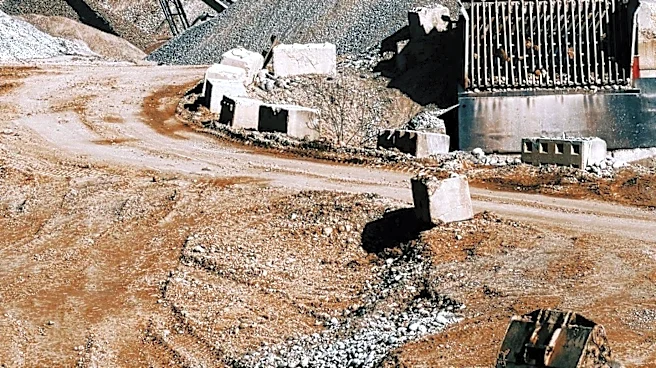
Aclara Resources Inc. (TSX: ARA) has entered into a joint venture agreement with the Japan Organization for Metals and Energy Security (JOGMEC) to explore and advance ionic clay-hosted heavy rare earth deposits in Brazil. JOGMEC will provide up to US$3
million in funding over three years, with an option for an additional US$1.5 million to extend the earn-in period. If funding commitments are met, JOGMEC will have the option to acquire a 30% participating interest in one of Aclara’s Brazilian exploration projects, excluding the flagship Carina Project. This partnership allows JOGMEC to purchase production equal to its participating interest plus an additional 10% of future production, with the ability to assign these rights to Japanese companies. This agreement is seen as a model for building secure supply chains, contrasting with the U.S. approach, which often focuses on subsidies rather than integrated resource-to-customer pathways.
Why It's Important?
This agreement is highly significant for the U.S. as it underscores a critical difference in how allied nations are approaching rare earth supply chain security. While the U.S. has focused on domestic subsidies and supporting individual projects, Japan's strategy, exemplified by the JOGMEC-Aclara deal, emphasizes early investment, risk-sharing, and securing direct access to future production for its industrial users. This integrated approach ensures that Japanese industries have dependable access to essential materials, which are crucial for high-tech manufacturing, defense, and renewable energy sectors. The U.S. government, through entities like the U.S. International Development Finance Corporation and the Export-Import Bank, has also shown interest in Aclara's projects, including potential financing for Project Dynamo in Louisiana, aimed at rebuilding U.S. separation, metals, and alloys capacity. However, the Japanese model highlights a more comprehensive, long-term strategy for controlling the path from resource to customer, which could offer valuable lessons for U.S. policymakers in strengthening its own critical mineral supply chains.
What's Next?
The joint venture will focus on exploration activities in Brazil, with JOGMEC's funding supporting these initial stages. If the earn-in is completed, JOGMEC will gain significant purchase rights, potentially leading to a direct supply of rare earths for Japanese industries. For Aclara, this partnership provides capital for exploration and strengthens its position in the global rare earth market. The U.S. government's continued interest in Aclara's Project Dynamo, with a non-binding letter of interest for up to US$750 million in financing, suggests potential for significant U.S. involvement in downstream processing. The broader implication is that the U.S. may need to re-evaluate its strategy for securing critical minerals, potentially adopting more integrated approaches that connect resource development with industrial end-users, similar to Japan's model. This could involve fostering more direct partnerships and securing off-take agreements for U.S. companies.
Beyond the Headlines
The Aclara-JOGMEC agreement highlights the complex and multi-national nature of building secure critical mineral supply chains. It challenges the notion that every stage of the supply chain must be located within a single country to ensure security. Instead, it suggests that a strategically controlled supply chain can cross national borders, leveraging the particular strengths of different countries—Brazil for geology, Aclara for project development and processing technology, and Japan for established capabilities in separation, metal, alloy production, and magnet manufacturing. This model encourages international cooperation and a division of industrial responsibility among allies. For the U.S., this implies a need to move beyond fragmented programs and develop a cohesive strategy that integrates mining, processing, and manufacturing, potentially through partnerships with experienced allies like Japan. The long-term success of such initiatives will depend on effective coordination and a clear understanding of how to control the entire value chain, rather than just individual segments.