




What's Happening?
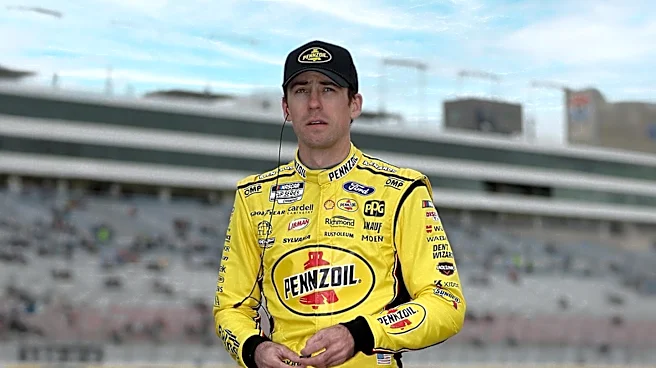
Team Penske has implemented a significant personnel change by swapping the pit crews of NASCAR Cup Series drivers Ryan Blaney and Austin Cindric. This decision was made two days after the 16-driver Chase field was finalized, and neither driver was consulted
prior to the swap. The move is described as a 'business decision' by Team Penske, aimed at enhancing their championship prospects. Throughout the regular season, Cindric's pit crew consistently outperformed Blaney's, which had been plagued by issues. At the end of the 26-race regular season, Cindric's crew was ranked 10th on pit road, while Blaney's was ranked 32nd. As a result of this change, Blaney, who is seeded second in the Chase, will now work with Cindric's former 10th-ranked pit crew, while Cindric, seeded 15th, will receive Blaney's previous crew.
Why It's Important?
This pit crew swap highlights the intense strategic measures teams are willing to undertake to gain a competitive edge in the high-stakes NASCAR Chase for the Cup. Pit stops are critical in NASCAR, often determining race outcomes and championship standings. By assigning a higher-performing pit crew to Ryan Blaney, who is a top contender and seeded second, Team Penske is directly investing in his championship chances. This decision underscores the belief that a strong pit crew can significantly impact a driver's performance and overall success, potentially shaving crucial seconds off pit stop times. For Austin Cindric, while he expressed understanding of the team's perspective, the move means he will not finish the season with the crew he believes was instrumental in getting him into the Chase. This situation also demonstrates the depth of talent within Team Penske's pit crew roster, allowing for such a significant reshuffle without, according to Blaney, a major disruption in operations.
What's Next?
Ryan Blaney will begin working with his new pit crew starting with the Cook Out Southern 500 at Darlington. He has already spent time with the new crew, discussing their preferences and how he can adjust his approach during pit stops. Blaney expressed his willingness to adapt to their needs, indicating a focus on seamless integration. Austin Cindric will also need to adjust to his new pit crew. The effectiveness of this strategic swap will be closely monitored throughout the Chase, as pit stop performance could be a decisive factor in the championship battle. The success or failure of this decision could influence future team management strategies in NASCAR, particularly regarding personnel changes during critical phases of the season.
Beyond the Headlines
The unconsulted pit crew swap raises questions about driver autonomy and the balance of power within NASCAR teams. While presented as a 'business decision' for the greater good of the team's championship aspirations, it underscores that drivers, despite their star status, are ultimately employees subject to team management's strategic choices. This incident could set a precedent or reinforce existing practices where team objectives supersede individual driver preferences, especially in high-stakes scenarios like the Chase. It also highlights the often-overlooked role of pit crews in motorsports; their performance is not just about speed but also about precision and teamwork, directly impacting a driver's ability to contend for a championship. The emotional aspect for drivers, particularly Cindric, who felt a connection with his original crew, reveals the human element within professional sports, where personal relationships and team dynamics can be abruptly altered for strategic advantage.