






What's Happening?
Moderna and Merck are making significant strides in personalized mRNA cancer vaccines, particularly with their intismeran autogene, which has shown clinical success in treating melanoma. This success has shifted the industry's focus from simply scaling
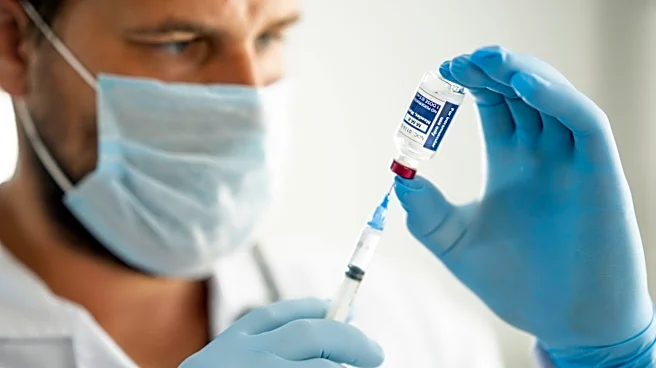
up production to 'scaling out and scaling down,' emphasizing the timely and cost-effective delivery of individualized vaccines to patients. Moderna's process involves sequencing an individual's cancer and healthy cells to identify up to 34 patient-specific neoantigens, which are then formulated into an mRNA vaccine to trigger an immune response against the tumor. The company has reduced the turnaround time from sample collection to vaccine administration to approximately six weeks, with potential for further reduction to under one month. Moderna has also established a dedicated facility in Massachusetts to support the planned launch of intismeran, initially for melanoma, with plans to expand capacity as demand grows.
Why It's Important?
The advancement of personalized mRNA cancer vaccines by Moderna and Merck holds substantial importance for the U.S. healthcare industry and patients. The clinical success of intismeran autogene in melanoma has raised expectations for this novel therapeutic approach, offering a new avenue for treating cancers that have historically been challenging. This development could lead to more effective and tailored treatments for various cancer types, potentially improving patient outcomes and survival rates. However, the commercial success of these personalized vaccines hinges on addressing the logistical and cost challenges associated with their manufacturing and delivery. The need to 'scale out and scale down' production means developing efficient systems to produce thousands of individualized vaccines, which could impact the accessibility and affordability of these treatments for a broader patient population. The investment in dedicated manufacturing facilities and the focus on reducing turnaround times are critical steps toward making these advanced therapies a reality.
What's Next?
Moderna and Merck plan to submit the clinical data for their personalized mRNA vaccine to the FDA, aiming for regulatory approval. The immediate focus will be on the launch of intismeran for melanoma, with Moderna's dedicated facility in Massachusetts supporting initial demand. As the market for personalized mRNA cancer vaccines expands, Moderna will need to further increase its manufacturing capacity to meet broader patient needs. The industry will also continue to grapple with the cost of goods and manufacturing, which will be crucial for the commercial viability and widespread adoption of these therapies. Further research and development will likely explore the application of this technology to other tumor types, potentially expanding the reach of personalized mRNA vaccines beyond melanoma. The ongoing efforts to reduce the time from sample collection to vaccine administration will also be a key area of focus to enhance the efficiency and accessibility of these treatments.
Beyond the Headlines
The emergence of personalized mRNA cancer vaccines represents a paradigm shift in oncology, moving towards highly individualized treatments tailored to each patient's unique cancer profile. This approach raises profound ethical and logistical considerations, particularly regarding equitable access and the potential for disparities in care. The high cost of personalized manufacturing could create barriers for patients without adequate insurance or financial resources, necessitating discussions around pricing models and healthcare policies to ensure broad accessibility. Furthermore, the rapid advancements in mRNA technology, initially propelled by the COVID-19 pandemic, are now demonstrating their versatility in other medical fields, such as cancer treatment. This could lead to a broader re-evaluation of traditional drug development and manufacturing processes, fostering innovation in personalized medicine across various diseases. The success of these vaccines also highlights the critical role of bioinformatics and data analysis in modern medicine, as the identification of patient-specific neoantigens is central to their efficacy.