




What's Happening?
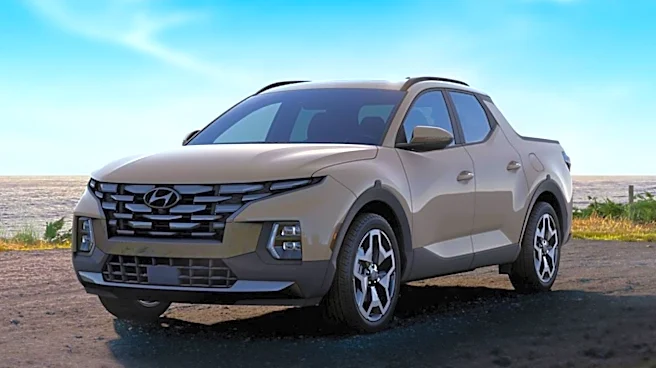
Hyundai Motor America is preparing to introduce its first mid-size pickup truck with a ladder chassis for the North American market by 2029. This new model aims to directly compete with established vehicles like the Toyota Tacoma and Ford Ranger, moving
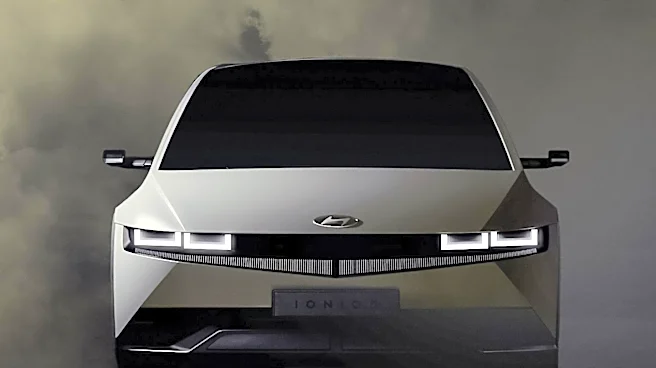
away from the compact pickup formula of its Santa Cruz model. The company plans to manufacture this new pickup in the United States, with the Hyundai Motor Group Metaplant America in Georgia being a primary candidate for production. This facility currently produces electric and electrified vehicles for North American markets, including the Ioniq 5 and Ioniq 9, and is slated to incorporate more Hyundai, Kia, and Genesis models. Hyundai's CEO, José Muñoz, confirmed the 2029 launch target, indicating a strategic shift to enter a highly competitive segment of the U.S. automotive market. The decision to produce in the U.S. also opens the possibility of using the country as an export hub for other regions, depending on factors such as costs, component supply, and international demand.
Why It's Important?
This move signifies Hyundai's aggressive strategy to capture a larger share of the lucrative U.S. pickup truck market, a segment traditionally dominated by American and Japanese manufacturers. By developing a robust, ladder-chassis pickup, Hyundai is directly addressing the demand for work-oriented and off-road capable vehicles, a departure from its previous compact offerings. Local production in the U.S., particularly at the Georgia Metaplant, will create jobs and strengthen the domestic automotive manufacturing sector. Furthermore, the potential for the U.S. plant to serve as an export base could enhance America's role in global automotive supply chains and boost economic activity. This expansion also reflects a broader trend of foreign automakers investing heavily in U.S. manufacturing to mitigate trade risks and cater more directly to American consumer preferences, impacting local economies and employment in states like Georgia.
What's Next?
Hyundai is expected to finalize its production plans for the new pickup truck, with the Georgia Metaplant being a strong contender for manufacturing. The company will need to make rapid decisions regarding platform development, supplier networks, and target markets to meet the 2029 launch deadline. There is also a possibility that this new ladder-chassis architecture could be leveraged to develop a full family of vehicles, including SUV derivatives, to compete with models like the Toyota 4Runner. This would allow Hyundai to distribute development costs across multiple models, increasing the project's profitability. The company will also continue to evaluate the economic and logistical viability of using the U.S. as a global export base for the new pickup, potentially dividing worldwide production between North America and Asia.
Beyond the Headlines
Hyundai's strategic pivot towards a more traditional, robust pickup truck for the U.S. market highlights a deeper understanding of American consumer preferences and the competitive landscape. The failure of the Santa Cruz to significantly penetrate the market, compared to models like the Ford Maverick, has likely informed this shift towards a vehicle designed for work and off-road capabilities. This move could also signal a broader trend among international automakers to adapt their product offerings more specifically to regional demands, rather than pursuing a one-size-fits-all global strategy. The investment in U.S. manufacturing and the potential for export could also foster greater integration of Hyundai into the American industrial fabric, potentially influencing future trade policies and economic partnerships.