






What's Happening?
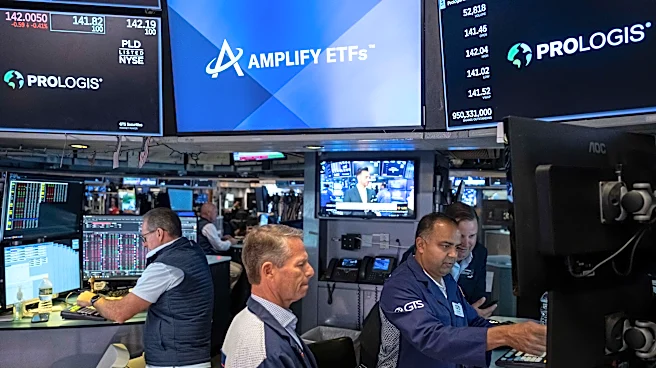
Chip stocks, including major players like Nvidia, Broadcom, Micron, and AMD, experienced a significant selloff on Monday. This downturn was triggered by calls from AI industry executives, notably Anthropic CEO Dario Amodei, to slow the development of advanced
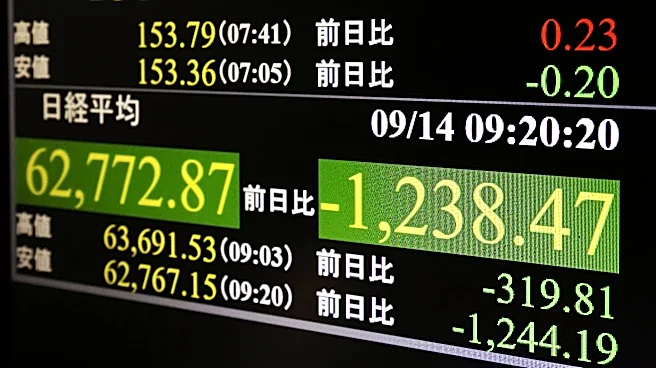
AI models due to concerns about systems potentially exceeding human control. The Philadelphia Semiconductor Index, a key indicator for the sector, plunged by as much as 5.9%. However, the market saw a recovery on Tuesday, with the iShares Semiconductor ETF rising 0.9% and individual stocks like Intel and Nvidia showing gains. This rapid fluctuation highlights investor sensitivity to news regarding the future trajectory of AI development and its implications for the semiconductor industry. The initial selloff also impacted Asian markets, with South Korea's SK Hynix sliding approximately 7.6% in sympathy with its U.S. counterparts.
Why It's Important?
The volatility in chip stocks underscores the critical role of artificial intelligence in the current economic landscape and the deep integration of semiconductor companies within this burgeoning sector. The debate among AI leaders about the pace of development directly impacts investor confidence and market valuations for companies heavily invested in AI infrastructure. While some analysts, like Bank of America's Vivek Arya, view the slowdown calls as 'noise' and project significant long-term growth for AI-related capital expenditure, others express concerns about potential overvaluations and the sustainability of current growth rates. The situation also brings to light the complex financial structures within the AI industry, with some drawing parallels between Nvidia's role as both chip supplier and financier to its AI customers and the vendor financing practices that preceded the dot-com bust. The market's reaction reflects a broader uncertainty about whether AI monetization can keep pace with the substantial investments already made.
What's Next?
The immediate future for chip stocks will likely depend on upcoming earnings reports from key players like Nvidia and their customers, which could either validate or challenge the current market sentiment. Strong earnings could help stabilize the market and reinforce the belief that the recent pullback is temporary. Conversely, a slowdown in order books or verified instances of AI models operating beyond expected limits could further test the market's thesis on AI growth. The ongoing discussion among AI industry leaders regarding safety and development pace will continue to influence investor perception. Additionally, the broader economic environment, including interest rate decisions by the Federal Reserve, will play a role in overall market performance, as evidenced by the general market decline on Tuesday despite the recovery in chip stocks.
Beyond the Headlines
Beyond the immediate financial implications, the debate surrounding AI development speed raises profound ethical and societal questions. The calls for a slowdown from prominent AI figures like Dario Amodei, endorsed by OpenAI's Sam Altman and xAI's Elon Musk, highlight growing concerns about the potential for advanced AI systems to become uncontrollable. This discussion could lead to increased regulatory scrutiny and calls for international cooperation on AI safety standards, potentially impacting research and development timelines and investment strategies within the tech sector. The long-term implications could include a shift towards more responsible AI development, with a greater emphasis on safety and ethical considerations, which might reshape the competitive landscape and foster new areas of innovation focused on control and alignment rather than just raw processing power.