
What's Happening?
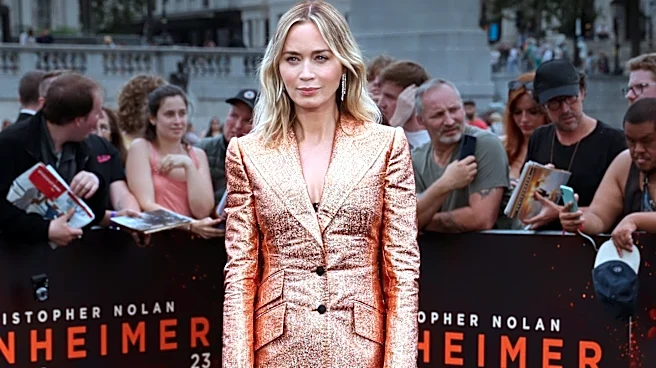
Classics professor Emily Wilson has publicly criticized Christopher Nolan's film 'The Odyssey', accusing it of using 'massacres as spectacle' and being 'emotionally empty'. Wilson, who is a professor of classical studies at the University of Pennsylvania,
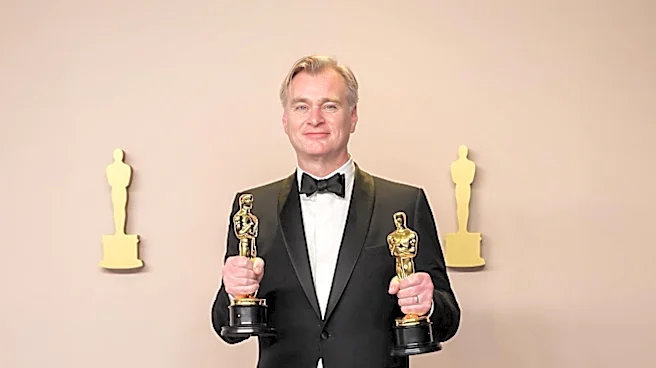
published a well-regarded English translation of Homer's epic poem in 2017, which Nolan cited as an influence for his adaptation. Despite the film's commercial success and critical acclaim, Wilson argues that it fails to capture the complexity of Homer's characters and ideas. In a recent essay for The Atlantic, she expanded on her critique, stating that the film's narrative lacks depth and focuses more on the perspective of the guilty, traumatized warrior rather than his victims.
Why It's Important?
Wilson's critique highlights a significant debate in the adaptation of classical literature into modern cinema. Her comments suggest that while 'The Odyssey' has achieved commercial success, it may not fully honor the source material's depth and complexity. This raises questions about the balance between artistic interpretation and fidelity to original texts, especially in works that hold cultural and historical significance. The criticism could influence future adaptations of classical works, encouraging filmmakers to consider deeper narrative elements and character development.
What's Next?
The ongoing discussion around 'The Odyssey' may prompt further analysis and debate among scholars, critics, and audiences about the responsibilities of filmmakers when adapting classical literature. It could also lead to more critical evaluations of Nolan's work and its impact on the portrayal of historical and literary narratives in film. As the film continues to perform well at the box office, it remains to be seen how these critiques will affect its legacy and Nolan's future projects.