



What's Happening?
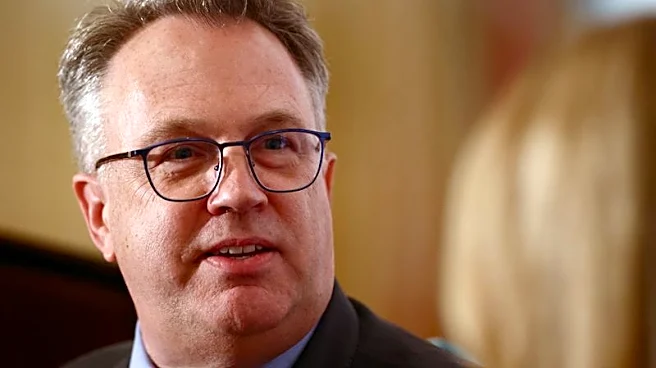
Kevin Warsh, the new Chair of the Federal Reserve, is reshaping the Fed's communication strategy by reducing forward guidance, a move that has sparked debate over transparency and policy direction. Warsh's approach contrasts with his predecessor, Jerome
Powell, who provided clear signals about future policy actions. Warsh's decision to withhold information about potential interest rate changes has left markets uncertain about the Fed's plans to address inflation. This shift has led to increased market volatility, with concerns about the Fed's ability to manage economic conditions effectively.
Why It's Important?
Warsh's changes to the Fed's communication strategy represent a significant departure from recent practices, raising questions about the impact on market stability and economic policy. The lack of forward guidance could lead to greater uncertainty in financial markets, affecting investment decisions and economic growth. This approach may also challenge the Fed's credibility and its relationship with market participants, as stakeholders seek clarity on the Fed's plans to address inflation and economic challenges. The shift in communication strategy could have long-term implications for the Fed's effectiveness and its role in managing the economy.
What's Next?
As Warsh continues to implement changes at the Fed, stakeholders will be closely monitoring the impact on market stability and economic policy. The Fed's ability to manage inflation and economic growth will be tested, as the lack of clear guidance may complicate market reactions to economic data. Warsh's leadership and decisions will likely be scrutinized by both the financial community and political leaders, who may call for more transparency and clarity in the Fed's communications. The outcome of these changes will be a key area of focus in the coming months.