

What's Happening?
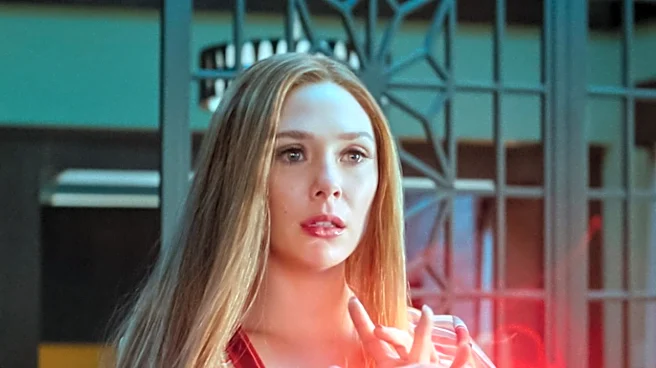
Elizabeth Olsen, who portrays Scarlet Witch/Wanda Maximoff in the Marvel Cinematic Universe, has revealed that the writers for 'Doctor Strange in the Multiverse of Madness' were not fully informed about the specific details and conclusion of the 'WandaVision'
series during the development of the film's script. According to Olsen, when she inquired if the 'Multiverse of Madness' writers had seen 'WandaVision,' they responded that they had not, as the series was not yet finished. This lack of awareness led to a different narrative approach for Scarlet Witch in the film, despite both projects exploring themes of grief and loss. Olsen noted that she had to approach these shared themes from a different perspective in 'Doctor Strange' to avoid repetition and maintain interest for herself and the audience. The film depicted Wanda Maximoff embarking on a destructive path across the multiverse in an attempt to reunite with her children, ultimately making a significant sacrifice.
Why It's Important?
This revelation highlights a potential disconnect in the collaborative storytelling process within the Marvel Cinematic Universe, particularly between its Disney+ series and feature films. The MCU is known for its interconnected narratives, where events in one project often directly influence others. A lack of complete information sharing among creative teams can lead to inconsistencies or character arcs that feel disjointed to dedicated viewers. For fans, this explains why Scarlet Witch's character progression in 'Multiverse of Madness' might have felt different or even contradictory to her development in 'WandaVision.' It underscores the challenges of managing a vast, multi-platform narrative universe and maintaining a cohesive vision across numerous writers, directors, and production schedules. This situation could impact audience perception of character continuity and the overall narrative integrity of the MCU.
What's Next?
Despite the past narrative challenges, rumors persist about Scarlet Witch's future in the MCU, particularly concerning the upcoming 'Mutant Saga.' Speculation suggests that Wanda Maximoff could be a central figure, potentially serving as both a lead and a villain. Elizabeth Olsen has expressed interest in adapting the 'House of M' comic storyline, which features Wanda removing mutants' powers, a concept that could align with Marvel Studios' planned 'X-Men' reboot. While Olsen has denied an immediate return as Scarlet Witch, the character's deep ties to mutant origins in the comics, including Magneto and Quicksilver, make her a strong candidate for future appearances. Additionally, the 'VisionQuest' series, set to premiere in October 2026, is expected to be rewarding for 'WandaVision' fans, though it's currently unknown if Wanda will appear.
Beyond the Headlines
The situation with 'WandaVision' and 'Doctor Strange in the Multiverse of Madness' raises broader questions about creative autonomy versus overarching narrative control in large cinematic universes. While individual creative teams bring unique visions to their projects, the need for seamless integration across a shared universe often requires stringent coordination. This incident suggests that such coordination might not always be perfect, potentially leading to creative compromises or narrative adjustments. It also highlights the pressure on actors like Elizabeth Olsen to reconcile differing interpretations of their characters. The long-term implication could be a re-evaluation of Marvel's internal communication and planning strategies to ensure greater narrative consistency, especially as the MCU continues to expand with more interconnected films and series. This balance between individual creative freedom and universal coherence remains a critical challenge for expansive storytelling franchises.