

What's Happening?
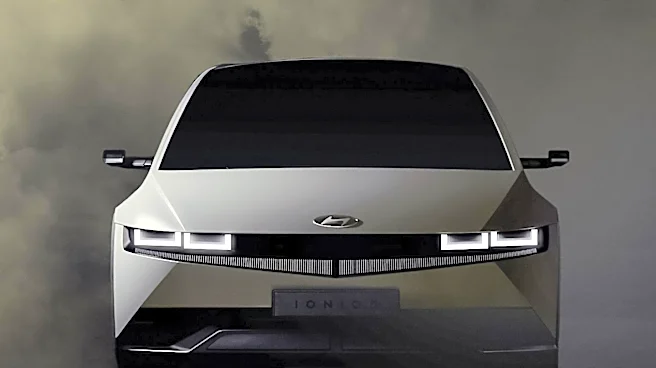
Hyundai has introduced the Ioniq V, an electric sedan designed specifically for the Chinese market, with no current plans for its release in the United States or Europe. This new EV is notable for its affordability, starting at the equivalent of less
than $18,000, and its midsize sedan footprint, similar to a Hyundai Sonata or Toyota Camry. The Ioniq V boasts a dramatic design, a 27-inch display powered by Qualcomm's Snapdragon 8295 processor, and artificial intelligence technology from Chinese companies Baidu and ByteDance integrated into its infotainment system. It also features driver-assistance technology from Momenta and nine airbags, alongside extensive active safety systems. The vehicle offers up to 225 horsepower and a claimed range of up to 404 miles, though this figure is based on China's CLTC testing procedure, which is more optimistic than the EPA cycle used in the U.S. The Ioniq V utilizes Hyundai's E-GMP architecture and an 800-volt electrical system.
Why It's Important?
The exclusive launch of the Hyundai Ioniq V in China highlights a growing disparity in the availability of affordable, technologically advanced electric vehicles between the Chinese market and Western markets, including the U.S. American consumers, who frequently express a desire for such vehicles, are currently unable to access this model. This situation underscores the intense competition within China's EV sector, where domestic manufacturers are driving down prices and increasing specifications, compelling international companies like Hyundai to offer more for less. The Ioniq V's advanced features, including its large display, AI-powered infotainment, and comprehensive safety systems, at a sub-$18,000 price point, set a benchmark that is currently unmet by most EVs available in the U.S. This trend could influence future global EV strategies, as Hyundai has indicated that lessons from its Chinese EV program might inform vehicles sold worldwide, potentially impacting the U.S. automotive market in the long term by raising consumer expectations for value and technology in EVs.
What's Next?
While Hyundai has not announced plans to bring the Ioniq V to the U.S., the company has suggested that insights gained from its Chinese EV program could influence its global vehicle offerings. This implies that elements of the Ioniq V's design philosophy, technology, or pricing strategies might eventually be incorporated into future Hyundai models destined for international markets. However, there is no specific timeline for such developments. The continued success and evolution of the Ioniq V in China could further pressure other automakers to develop more affordable and feature-rich EVs for the U.S. market to meet consumer demand. For now, U.S. buyers will continue to observe the Chinese EV market from afar, potentially fueling discussions about the need for more competitive and accessible electric vehicle options domestically.
Beyond the Headlines
The Hyundai Ioniq V's market strategy in China reveals a deeper shift in the global automotive landscape, where China is not just a manufacturing hub but also a leading innovator and a highly competitive consumer market for electric vehicles. The integration of AI technology from Chinese companies Baidu and ByteDance into the Ioniq V's infotainment system signifies a growing reliance on local technological ecosystems within specific markets, potentially leading to more regionally tailored vehicle designs and features. This could result in a fragmentation of global automotive offerings, where certain advanced features or price points are exclusive to particular regions. The Ioniq V's affordability and advanced features also challenge the perception that cutting-edge EV technology must come with a premium price tag, potentially pushing the entire industry towards more cost-effective and feature-rich solutions globally, even if the direct model is not available in all markets.