



What's Happening?
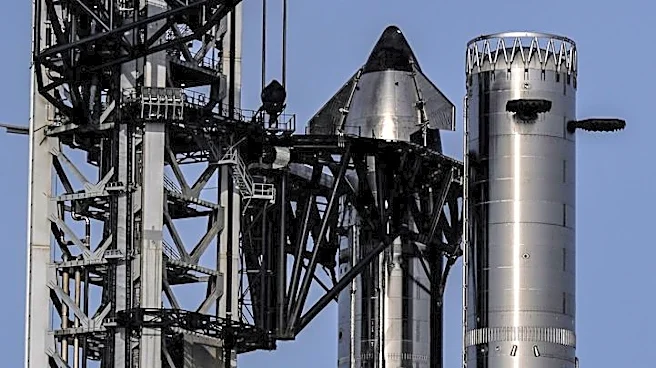
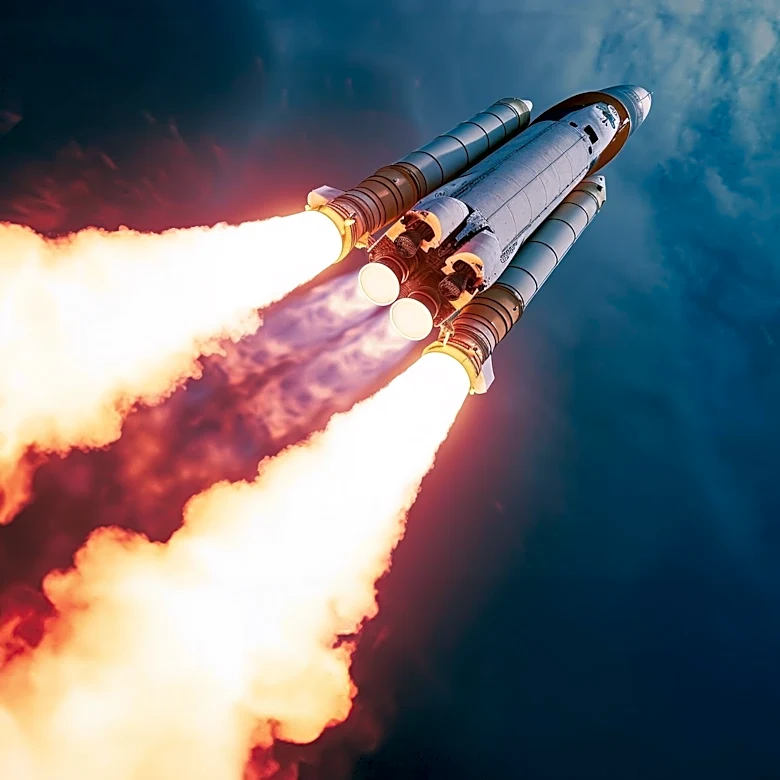
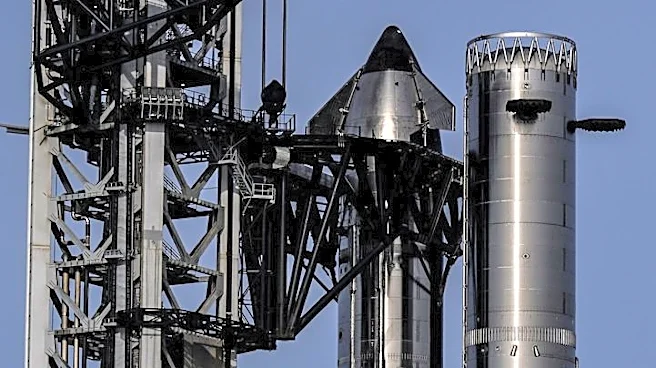
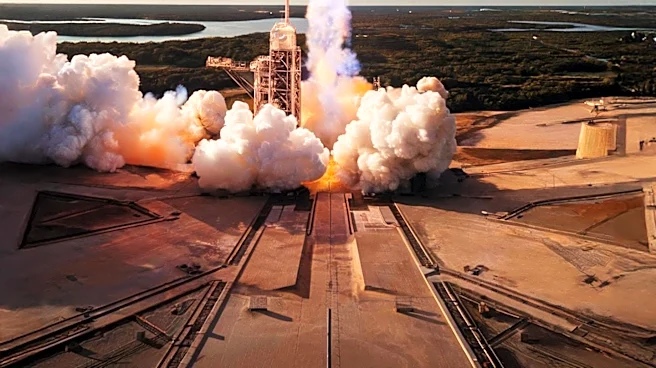
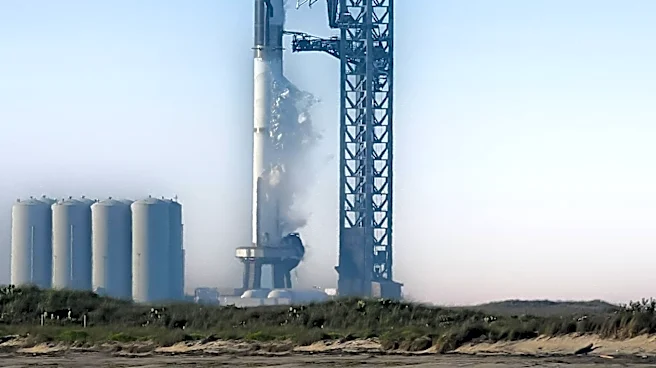
SpaceX's Starship V3 has successfully completed its second flight, marking a significant milestone for the company. The mission, which launched from Starbase in South Texas, involved the deployment of 20 next-generation Starlink V3 satellites. This was
the first real payload deployment in the Starship program's history. The satellites were released on a suborbital trajectory, extended their solar arrays and antennas, and successfully linked to the existing Starlink constellation via high-capacity inter-satellite laser terminals before burning up on re-entry. The mission aimed to validate Starship's capability as a working satellite bus and to integrate V3-class hardware with the operational fleet in real time. The launch also featured a new camera view showing the Super Heavy booster separation, a maneuver that was executed successfully.
Why It's Important?
This successful mission is crucial for SpaceX as it demonstrates the Starship's ability to carry and deploy real payloads, a key step towards its goal of rapid iteration and frequent launches. The deployment of the Starlink V3 satellites is particularly significant as it aims to scale bandwidth per user without increasing the number of satellites in orbit. This capability is essential for expanding the Starlink network's capacity and efficiency. The mission also provided valuable data on payload deployment, booster recovery mechanics, and heat-shield performance, which are critical for future missions. The success of this flight moves SpaceX closer to its ambition of achieving aircraft-like launch frequency with the Starship.
What's Next?
Following this successful mission, SpaceX will focus on increasing the launch cadence of the Starship. The data collected from this flight will be used to push towards orbital Starlink V3 deployments. Additionally, SpaceX will work on improving booster recovery techniques, with the ultimate goal of returning the booster to the launch tower. The company aims to refine its processes to achieve more frequent and reliable launches, which will be crucial for the continued expansion of the Starlink network and other future missions.