





What's Happening?
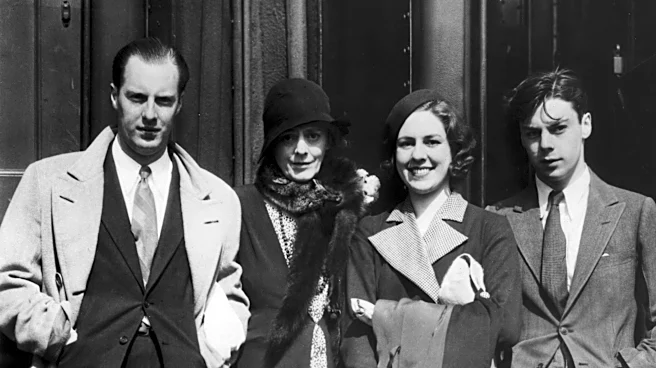
In 1932, Metro-Goldwyn-Mayer (MGM) released the film 'Rasputin and the Empress,' which dramatized the life and death of Grigori Rasputin. The film featured characters clearly based on real individuals, including 'Prince Paul' for Felix Yusupov, Rasputin's
murderer, and 'Princess Natasha' for Yusupov's wife, Irina. The movie depicted 'Princess Natasha' as being hypnotized and assaulted by Rasputin, an event with no historical basis. Felix Yusupov, unable to sue for defamation on his own behalf due to his admission of murder, sued MGM on behalf of his wife, Irina, claiming the film denigrated her virtue. The Yusupovs ultimately settled out of court with MGM for a reported $250,000. Following this costly lawsuit, MGM pulled the film from circulation for decades. A key point of contention was the film's opening credits, which stated, 'This concerns the destruction of an empire… A few of the characters are still alive—the rest met death by violence.' Legal authorities advised MGM that this statement implied historical accuracy, strengthening the defamation claim. Consequently, MGM and other major American studios began incorporating 'This film is a work of fiction. Any resemblance to persons, living or dead, is purely coincidental' disclaimers in their movies to prevent similar future lawsuits.
Why It's Important?
This historical lawsuit against MGM had a profound and lasting impact on the American film industry, establishing a standard practice that continues to this day. The introduction of the 'work of fiction' disclaimer became a critical legal safeguard for studios, protecting them from potential defamation and libel claims when depicting historical events or individuals. This measure allowed filmmakers greater creative freedom to dramatize stories without the constant threat of legal action from those who might feel misrepresented. Without this precedent, the landscape of biographical films, historical dramas, and even fictional narratives with real-world inspirations could be significantly different, potentially leading to more cautious storytelling and fewer adaptations of real-life events. The financial settlement of $250,000 in 1932, a substantial sum at the time, underscored the financial risks studios faced, prompting a systemic change in how films were presented to the public. This event highlights the intricate relationship between artistic expression, legal accountability, and public perception in the entertainment industry.
What's Next?
While the immediate 'next step' of this historical event has long passed, its legacy continues to influence contemporary filmmaking. Every time a film or television show includes a 'work of fiction' disclaimer, it is a direct echo of the MGM lawsuit. Future productions dealing with historical figures or events will continue to rely on this legal precedent to mitigate risks. The ongoing challenge for filmmakers remains balancing creative interpretation with potential legal ramifications, especially in an era where public figures and their descendants are increasingly vigilant about their portrayal. The legal framework established by this case will likely continue to evolve with new forms of media and digital content, but the fundamental principle of disclaiming factual accuracy for dramatic works will persist as a cornerstone of entertainment law.
Beyond the Headlines
The MGM lawsuit of 1932 delves into deeper implications concerning the ethical boundaries of artistic license versus historical accuracy and personal reputation. The case underscored the power of media to shape public perception and the potential for fictionalized portrayals to cause real-world harm to individuals, even if indirectly. It also highlights the tension between entertainment's desire for compelling narratives and the legal system's role in protecting individual rights. The widespread adoption of the disclaimer reflects a cultural acknowledgment that while art can draw from reality, it is not always a literal representation. This event contributed to the professionalization of legal departments within film studios and influenced how contracts and production guidelines were structured. It also subtly educated audiences to differentiate between dramatized accounts and factual history, even if that distinction is often blurred in practice. The case serves as a historical marker in the ongoing debate about truth, representation, and responsibility in storytelling.