





What's Happening?
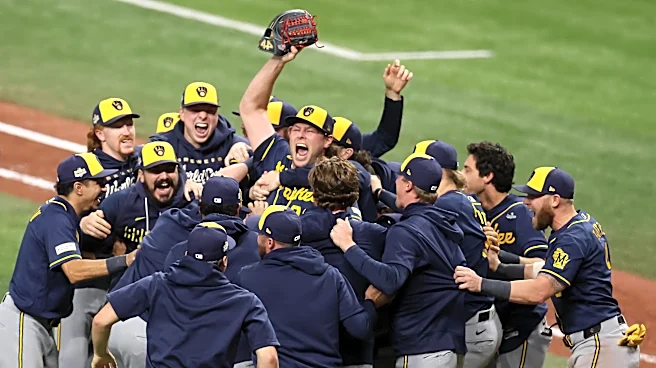
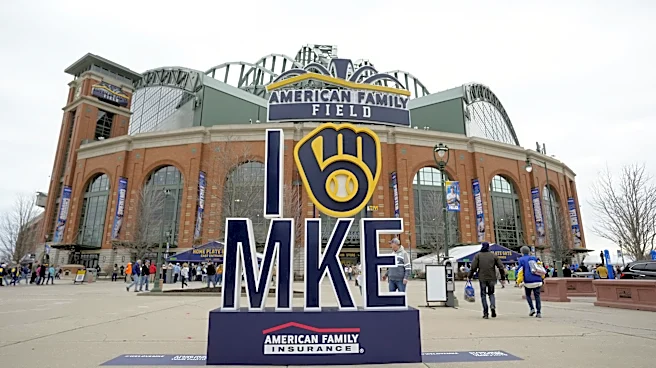
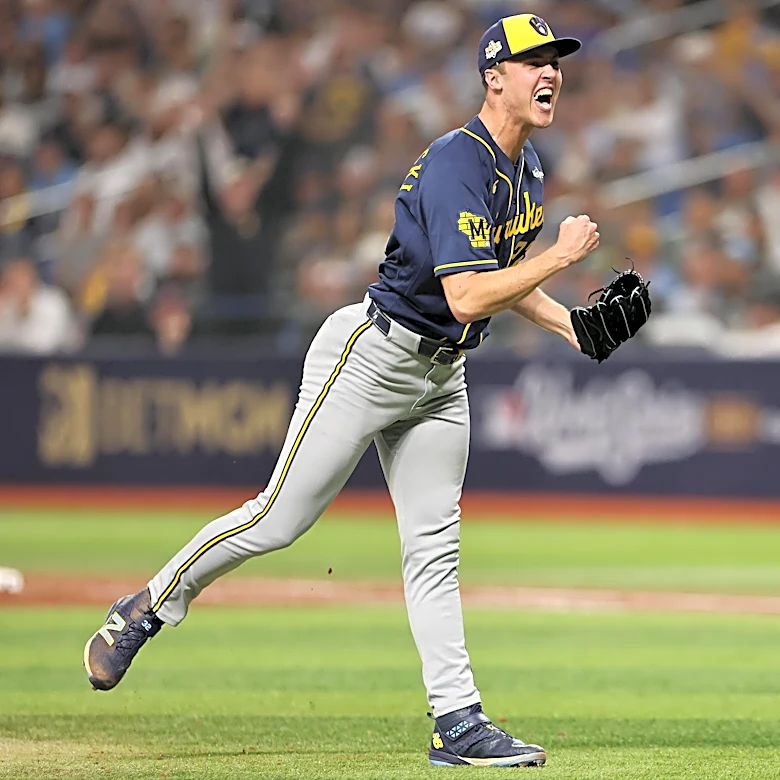
Mark Attanasio, owner of the Milwaukee Brewers, has expressed support for a proposed revenue-sharing system in Major League Baseball (MLB) that includes a salary cap and floor. This comes as the Brewers celebrate their first World Series championship,
a success that typically boosts franchise revenue. However, the impending expiration of MLB's collective-bargaining agreement on December 1st, and the potential for a player lockout, could complicate the team's ability to capitalize on this momentum. Attanasio stated that the proposed system would help smaller-market teams like the Brewers compete more effectively, aligning with what he believes fans desire. The Brewers, who ranked 19th in MLB payroll this season, along with the Tampa Bay Rays (27th in payroll), stand to benefit from economic changes designed to improve competitive balance across the league.
Why It's Important?
The potential implementation of a salary cap and floor system in MLB represents a significant shift in the league's economic structure. For small-market teams such as the Milwaukee Brewers, this change could level the playing field, allowing them to retain talent and compete more consistently with high-spending franchises. Historically, the absence of a salary cap in MLB has led to vast disparities in team payrolls, often disadvantaging teams in smaller media markets. A new revenue-sharing model could foster greater competitive balance, potentially leading to more unpredictable and exciting seasons, which could increase fan engagement and overall league revenue. Conversely, a prolonged labor stoppage due to disagreements over these economic changes could severely impact all 30 teams, disrupting the 2027 season and negating the financial benefits of recent successes for teams like the Brewers.
What's Next?
MLB owners are advocating for a hard salary cap and floor system to be implemented starting in 2028, a proposal that the players' union has firmly rejected. With the current collective-bargaining agreement expiring on December 1st, a lockout is anticipated. The outcome of these negotiations will determine the economic landscape of MLB for years to come and directly impact how teams like the Brewers can leverage their championship success. If a deal is reached that includes a salary cap and floor, it could provide more financial flexibility for the Brewers to invest in their roster and sustain competitive performance. However, a prolonged work stoppage would lead to canceled games, affecting ticket sales, sponsorships, and overall revenue for all teams, including those poised for a post-championship boost.
Beyond the Headlines
The debate over MLB's economic system reflects a broader tension in professional sports between owners seeking financial stability and competitive parity, and players advocating for fair compensation and free-market principles. The Brewers' recent championship, achieved with a relatively modest payroll, highlights the potential for success even under the current system, but also underscores the challenges of sustaining it without structural changes. The proposed revenue-sharing system could redefine the competitive dynamics of baseball, potentially leading to a more equitable distribution of talent and resources across the league. This situation also draws parallels to other sports leagues that have implemented salary caps, demonstrating the complex interplay between labor relations, economic models, and the pursuit of competitive excellence in professional sports.