







What's Happening?
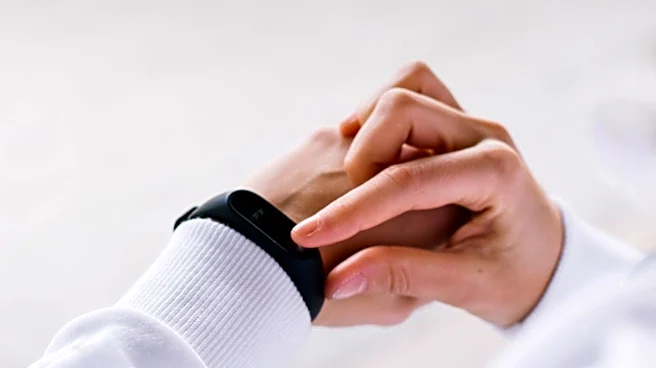
Sleep trackers, including smartwatches, rings, and smartphone apps, have become increasingly sophisticated, providing users with detailed information on sleep stages and recovery. A recent survey by the American Academy of Sleep Medicine indicates that
nearly half of U.S. adults use these devices. However, health experts, such as Nicole Shockley, APRN, CNP, an Aspirus Primary Care Provider, caution against over-reliance on sleep scores. A systematic review found that wearable sleep measurements do not always align with an individual's self-reported sleep quality. Shockley notes that these devices can be either too sensitive or not sensitive enough, making their data useful for identifying long-term patterns but insufficient for diagnosing sleep disorders or replacing medical evaluations. Over-focusing on sleep tracker data can lead to increased anxiety and stress, a phenomenon researchers term 'orthosomnia,' defined as an unhealthy fixation on achieving perfect sleep based on device metrics.
Why It's Important?
The widespread adoption of sleep-tracking technology has significant implications for public health and individual well-being in the U.S. While these devices offer accessible insights into sleep patterns, the potential for misinterpretation or over-analysis of data can lead to adverse psychological effects like anxiety and stress, counteracting the goal of improved sleep. The concept of 'orthosomnia' highlights a growing concern where technology intended to enhance health may inadvertently create new forms of health-related anxiety. This situation underscores the critical need for individuals to understand the limitations of consumer-grade health technology and to consult healthcare professionals for persistent sleep issues. For the healthcare industry, it emphasizes the importance of patient education regarding wearable device data and the distinction between tracking trends and clinical diagnosis, ensuring that technology serves as a tool for awareness rather than a source of undue worry.
What's Next?
As sleep-tracking technology continues to evolve, there will likely be an increased focus on integrating these devices more effectively into healthcare practices. Healthcare providers may need to develop clearer guidelines for patients on how to interpret and utilize sleep tracker data responsibly. Manufacturers might also explore ways to make their data more clinically relevant or to incorporate features that encourage users to seek professional medical advice when concerning patterns emerge. Public health campaigns could also play a role in educating consumers about the benefits and limitations of sleep trackers, promoting a balanced approach to self-monitoring. The ongoing dialogue between technology developers, healthcare professionals, and consumers will be crucial in shaping the future of sleep health management, ensuring that these tools genuinely contribute to better health outcomes without fostering unnecessary anxiety.
Beyond the Headlines
The rise of orthosomnia points to a broader societal trend of data-driven self-optimization, where individuals increasingly rely on metrics to define and improve various aspects of their lives. This phenomenon extends beyond sleep to other areas like fitness and nutrition, raising questions about the psychological impact of constant self-monitoring. Ethically, it prompts a discussion on the responsibility of technology companies to design devices that promote well-being without inadvertently fostering obsessive behaviors. Legally, as these devices collect more personal health data, concerns about data privacy and security will continue to grow. Culturally, the emphasis on 'perfect' sleep, as defined by algorithms, could shift societal perceptions of what constitutes healthy rest, potentially overlooking individual variations and the subjective experience of sleep. This development highlights the complex interplay between technology, health, and human psychology in the digital age.