





What's Happening?
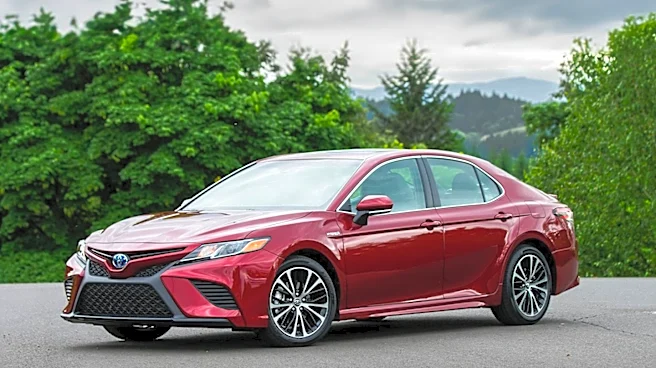
Toyota is reintroducing the Camry to the Japanese market, but this time, the vehicles will be manufactured in the United States at Toyota Motor Manufacturing Kentucky, Inc. This decision follows a statement by Toyota Chairman Akio Toyoda during the 2026
Super Taikyu Fuji 24 Hours Race, where he expressed a desire to sell US-made Camrys in Japan. The move is strategic, aiming to potentially improve the trade balance between the two countries and address ongoing tariff issues. The 11th-generation Camry for the Japanese Domestic Market (JDM) has been specifically adjusted for Japanese roads, including right-hand drive, right-sided turn signal switches, and localized infotainment and navigation systems. It has also undergone official domestic vehicle type certification under Japan’s Ministry of Land, Infrastructure, Transport and Tourism. The JDM Camry will feature a 2.5-liter hybrid powertrain with an electric continuously variable transmission (e-CVT), producing up to 225 horsepower.
Why It's Important?
This initiative by Toyota carries significant implications for U.S. manufacturing and international trade relations. By exporting US-made vehicles to Japan, Toyota could contribute to a more balanced trade relationship between the United States and Japan, potentially mitigating some of the pressures related to trade deficits and tariffs. For the U.S. automotive industry, this represents a vote of confidence in American manufacturing capabilities and could lead to increased production and job stability at facilities like Toyota Motor Manufacturing Kentucky. It also highlights how global automakers are strategically adapting their supply chains and market approaches in response to geopolitical and economic factors, such as tariffs. The decision also reflects a renewed interest in sedans among younger Japanese buyers, indicating a potential shift in consumer preferences that could benefit sedan production in the U.S.
What's Next?
The introduction of the US-made Camry into the Japanese market will be closely watched for its impact on trade balances and tariff discussions between the U.S. and Japan. If successful, this strategy could encourage other multinational corporations to consider similar approaches to optimize their global manufacturing and distribution networks in response to trade policies. Toyota will monitor sales performance in Japan to assess the effectiveness of this strategy and gauge consumer reception to the imported model. The company may also evaluate whether this model can be replicated with other vehicle lines or in different international markets. The move could also influence future discussions on automotive tariffs, potentially leading to reconsiderations or adjustments in existing trade agreements.
Beyond the Headlines
This strategic decision by Toyota goes beyond simple product distribution; it reflects a complex interplay of economic diplomacy, manufacturing globalization, and evolving consumer tastes. By explicitly linking the sale of US-made cars in Japan to improving trade balance and addressing tariffs, Toyota is engaging in a form of corporate diplomacy, attempting to influence policy through economic action. This could set a precedent for how large multinational corporations navigate protectionist trade environments. Furthermore, the adaptation of a US-produced vehicle for a distinct foreign market like Japan, with its specific regulatory and consumer demands, showcases the flexibility and sophistication of modern automotive manufacturing. It also subtly challenges the traditional notion of domestic production for domestic consumption, highlighting an increasingly interconnected global economy where manufacturing locations are chosen for strategic rather than purely geographical reasons.