








What's Happening?
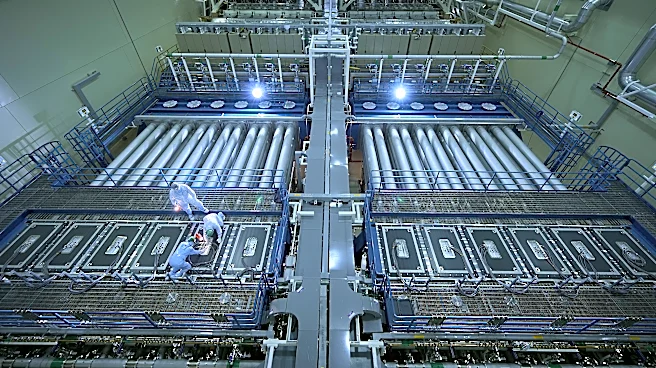
A pilot facility utilizing HiiROC's Thermal Plasma Electrolysis (TPE) technology has been established in eastern Germany. This facility, a collaboration with German energy companies Wintershall Dea and VNG AG, is designed to produce 'turquoise' hydrogen
on a commercial pilot scale. HiiROC's proprietary method differs from traditional water electrolysis by splitting natural gas or biomethane into hydrogen and solid carbon black. The plant has a nominal capacity of 400 kg of hydrogen per day, equivalent to nearly 5 GWh annually. It extracts hydrogen directly from the gas grid at the point of use, capturing carbon as solid carbon black for industrial applications like tire manufacturing and construction materials. Siemens is providing advanced control technology, safety automation, and factory scaling expertise to support the mass production and safe operation of these high-pressure plasma electrolysers.
Why It's Important?
This development is significant for the energy sector, particularly in the context of hydrogen production. The HiiROC technology offers an alternative to traditional green hydrogen (produced via water electrolysis) and blue hydrogen (produced from natural gas with carbon capture). By producing 'turquoise' hydrogen and solid carbon black, it provides a pathway for decarbonization that also yields a valuable industrial byproduct. The involvement of major German energy companies and Siemens underscores the potential for this technology to scale and integrate into existing energy infrastructure. This could reduce reliance on fossil fuels and contribute to climate goals by offering a cleaner method for hydrogen generation, which is a crucial component for various industrial processes and future energy systems.
What's Next?
The pilot facility in Germany represents a crucial step towards the broader industrial operation of HiiROC's modular systems across Germany and Europe. The partnership with Siemens is aimed at transitioning these systems into wider use, focusing on mass production and safe operation in demanding industrial environments. Future developments will likely involve expanding the capacity of such facilities, integrating the technology into more diverse industrial applications, and further optimizing the process for efficiency and cost-effectiveness. The success of this pilot could pave the way for increased investment and adoption of turquoise hydrogen production, potentially influencing energy policies and infrastructure development in the U.S. and globally.
Beyond the Headlines
The HiiROC technology introduces a new dimension to the hydrogen economy by offering a method that not only produces hydrogen but also sequesters carbon in a usable solid form. This approach could mitigate some of the challenges associated with carbon capture and storage, as the carbon black has immediate industrial value. The ethical implications revolve around the continued use of natural gas or biomethane as a feedstock, even if the carbon is captured. While it's a cleaner alternative to direct natural gas combustion, the long-term sustainability will depend on the source of the biomethane and the overall lifecycle emissions. This technology could also influence the competitive landscape of hydrogen production, potentially offering a more economically viable option for certain regions or industries compared to other hydrogen production methods.