








What's Happening?
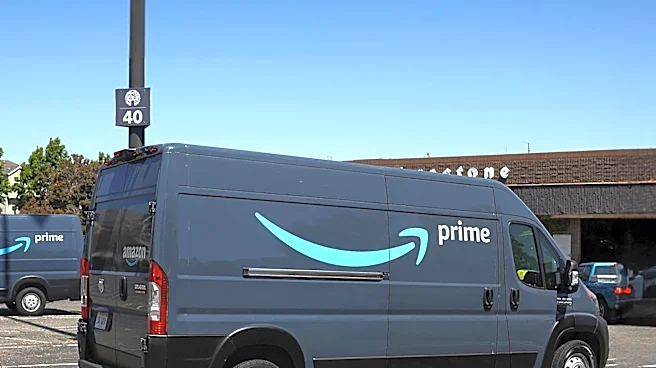
CLJ Transporting, a cargo carrier and dedicated Amazon Freight Partner operating out of Winter Haven, Florida, has filed for Chapter 11 bankruptcy protection in a Florida court. The company, which has been running deliveries for Amazon within a 200-mile
radius of Davenport for over a decade, is classified as a midsize regional trucking company with a fleet of 18 trucks and 34 employees. The bankruptcy filing, made in the Florida Middle Bankruptcy Court by attorney David Cruz, indicates CLJ Transporting's intent to restructure and remain in business. Middle District of Florida Subchapter V Trustee Michael C. Markham has been appointed to oversee the case, with the next hearing scheduled for October 14. The primary reason cited for the deterioration of CLJ's finances is creeping interest costs on several short-term financing agreements, according to the Tampa Bay Business Journal. This development follows a separate incident earlier in September where Amazon suspended operations with another transportation partner, 21 Air, after one of its cargo planes ran off a runway at Miami International, resulting in five fatalities.
Why It's Important?
This bankruptcy filing highlights the financial pressures faced by smaller logistics companies that partner with large e-commerce giants like Amazon. While Amazon maintains a vast network of over 50,000 third-party carriers globally, in addition to its own fleet of 80,000 semi-trucks, the financial instability of even a single partner can underscore broader vulnerabilities within the supply chain. The reliance on numerous external partners means that economic shifts, such as rising interest rates affecting financing agreements, can have a ripple effect on the operational capacity of these crucial delivery networks. For Amazon, the incident with CLJ Transporting, alongside the suspension of 21 Air, emphasizes the ongoing challenge of ensuring the stability and reliability of its extensive delivery ecosystem. The potential for disruptions, whether due to financial distress or safety incidents, could impact Amazon's ability to maintain its delivery promises and customer satisfaction, especially in specific regional markets where these partners operate.
What's Next?
CLJ Transporting's Chapter 11 filing suggests an attempt to reorganize its finances and continue operations, with a hearing set for October 14 to address the case. The outcome of this bankruptcy proceeding will determine the future of CLJ Transporting and its continued role, if any, as an Amazon Freight Partner. Amazon will likely continue to monitor the situation closely, as the stability of its third-party logistics providers is critical to its operational efficiency. The company may need to assess its vetting processes for partners and potentially offer more robust support or alternative arrangements to mitigate risks associated with the financial health of its smaller carriers. For the broader logistics industry, this event could prompt increased scrutiny of financial practices among regional trucking companies, particularly those heavily reliant on contracts with major retailers, and may lead to adjustments in how these partnerships are structured to ensure greater resilience against economic fluctuations.
Beyond the Headlines
The bankruptcy of CLJ Transporting, an Amazon Freight Partner, sheds light on the often-overlooked economic realities for smaller businesses operating within the shadow of e-commerce giants. While Amazon's vast network provides opportunities for these companies, it also exposes them to significant operational and financial pressures. The incident underscores the delicate balance between the efficiency demanded by large-scale e-commerce and the financial sustainability of the smaller entities that enable it. This situation could spark discussions about the contractual terms and financial support mechanisms offered by dominant platforms to their logistics partners, and whether these arrangements adequately protect smaller businesses from economic downturns. It also raises questions about the broader implications for local economies, as the failure of a regional trucking company can impact local employment and service availability. The event serves as a reminder of the complex interplay between global commerce and local business ecosystems, and the need for robust frameworks that ensure fair and sustainable partnerships.