






What's Happening?
Researchers at the University of Missouri are utilizing artificial intelligence to enhance planting decisions for corn farmers, aiming to increase efficiency and reduce production costs. The study, led by Jasmine Neupane, an assistant professor of agricultural
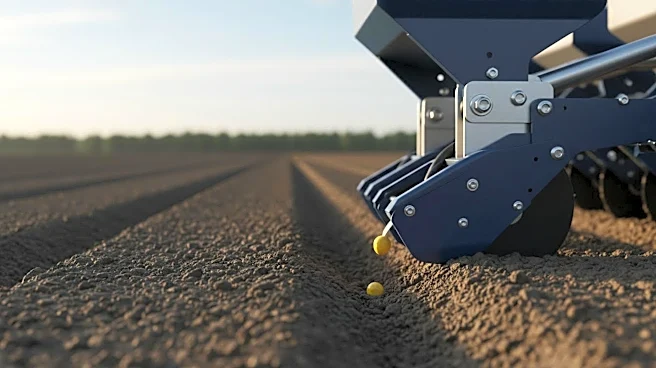
systems technology, focuses on adjusting seed populations based on the unique conditions of different field areas. By analyzing data from two Ohio farms, the AI model integrates soil characteristics, elevation, and historical crop yield information to create variable-rate seeding (VRS) plans. These plans enable modern planting equipment to automatically adjust seed populations according to productivity potential. The technology also aids in optimizing fertilizer and crop protection usage, thereby lowering costs and improving environmental stewardship by preventing unnecessary chemical applications.
Why It's Important?
The implementation of AI in agriculture represents a significant advancement in precision farming, offering potential benefits for both economic and environmental sustainability. By tailoring planting strategies to specific field conditions, farmers can achieve better yields and reduce input costs, which is crucial in an industry often challenged by fluctuating market prices and environmental concerns. The reduction in unnecessary chemical applications also addresses environmental issues such as nutrient runoff, which can lead to water pollution. This approach not only supports farmers in making more informed decisions but also contributes to broader efforts in sustainable agriculture, potentially setting a precedent for similar innovations in other crops and regions.
What's Next?
Jasmine Neupane plans to continue evaluating the AI-driven technology at the University of Missouri's Digital Agriculture Research and Extension Center. The ongoing research aims to refine the AI models and expand their applicability to other crops and farming conditions. As the technology develops, it may attract interest from agricultural technology companies and policymakers looking to support sustainable farming practices. The success of these AI tools could lead to wider adoption across the agricultural sector, influencing future farming techniques and policies.