






What's Happening?
Lucid Group, an electric vehicle manufacturer, has announced plans to reduce its U.S. workforce by approximately 18%. This decision affects full-time employees, contractors, and hourly manufacturing workers across its operations. The company has also
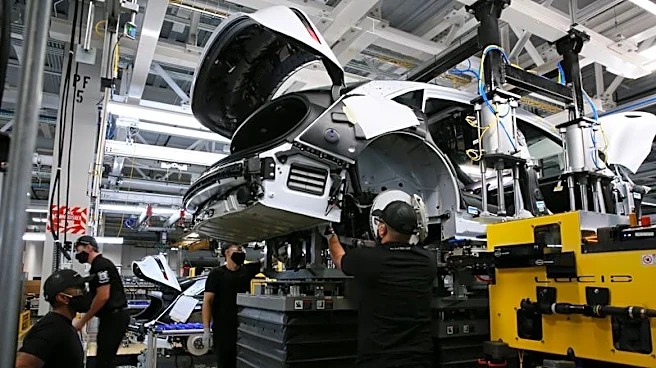
eliminated the role of Chief Operating Officer, previously held by Marc Winterhoff, and removed the second production shift at its AMP-1 manufacturing facility. These measures are part of a broader strategy to optimize costs and align production capacity with market demand, aiming to achieve profitability and positive cash flow. For the first quarter of 2026, Lucid reported a net loss of $1.02 billion, an increase from the previous year's $366.2 million loss. Despite a 20% increase in revenue to $282.4 million and a 149% rise in vehicle production, the company's operational losses grew to $989.4 million.
Why It's Important?
The workforce reduction at Lucid Group highlights the challenges faced by electric vehicle manufacturers in balancing growth with financial sustainability. As the company seeks to streamline operations and reduce costs, it aims to save approximately $158 million annually. This restructuring is crucial for Lucid to remain competitive in the rapidly evolving EV market, where profitability remains a significant hurdle. The decision to cut jobs and shift production strategies reflects broader industry trends of cost optimization and efficiency improvements. Stakeholders, including employees and investors, are closely watching how these changes will impact Lucid's market position and long-term viability.
What's Next?
Lucid plans to complete the workforce reduction and restructuring by the end of the third quarter of 2026, subject to local legal and consultation requirements. The company will incur cash charges of around $32 million related to severance payments and transition support. As Lucid navigates these changes, it will need to maintain production efficiency and market competitiveness to achieve its financial goals. The EV industry will be monitoring Lucid's progress, as its success or failure could influence strategies across the sector.