

What's Happening?
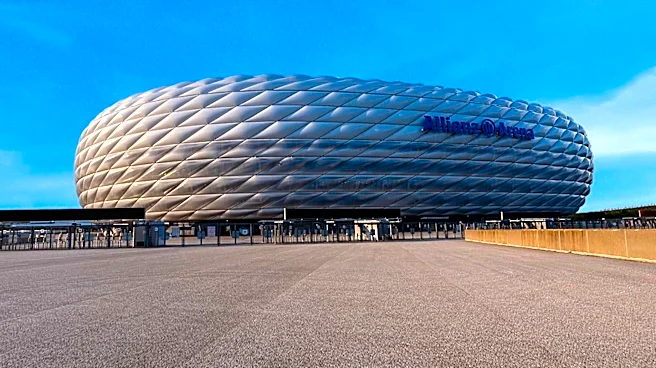
Organizers of the Sydney Marathon have acknowledged a significant branding error on their finisher medals, which mistakenly feature the Allianz Arena in Munich, Germany, instead of Sydney’s Allianz Stadium. The error was discovered when the medal was unveiled
earlier this week, causing it to become a trending topic on social media. Despite the mistake, organizers have decided to proceed with distributing the medals to the approximately 40,000 runners expected to participate in the event on August 30. They described the error as 'unfortunate' but noted that it has generated mostly good-humored discussion. The medal was designed by First Nations artist Ambrose Killian, who clarified that his involvement was limited to the lanyard and the front side of the medal, not the reverse side where the error occurred.
Why It's Important?
This incident, while seemingly minor, highlights the complexities and potential pitfalls in large-scale event management and branding. For the Sydney Marathon, an event aiming for global recognition and a place in the World Major Marathon lineup, such an error could impact its international image. While organizers have handled the situation with humor, it underscores the importance of meticulous attention to detail in promotional materials and merchandise, especially for events with significant international participation. The error also inadvertently created a unique talking point, potentially increasing the medal's collectibility and the event's visibility, albeit for an unexpected reason. The involvement of a First Nations artist in the design also brings attention to cultural representation in major events, emphasizing the need for accuracy in all aspects of design.
What's Next?
The Sydney Marathon is scheduled to proceed on August 30, with organizers confirming that the medals with the error will be distributed to finishers. This decision means that the 'unique' medals will become a part of the event's history. The organizers' public acknowledgment and lighthearted approach are likely intended to mitigate any negative impact on runner morale or the event's reputation. Future events of this scale will likely implement more stringent review processes for all branded materials to prevent similar mistakes. The incident may also prompt discussions within the event management industry about quality control and the potential for such errors to affect brand perception and participant experience. The focus will now shift to the successful execution of the race itself and the experience of the 40,000 participants.
Beyond the Headlines
Beyond the immediate logistical and branding implications, this 'unfortunate error' touches upon broader themes of global interconnectedness and the occasional blurring of geographical and cultural lines in an increasingly globalized world. The mix-up of two stadiums with similar names, both sponsored by Allianz, points to the pervasive influence of corporate branding across international sports. It also offers a lesson in crisis communication, as the organizers' transparent and humorous response has largely defused potential criticism. The incident could also spark conversations about the authenticity and uniqueness of event memorabilia, as this particular medal, due to its error, becomes a distinct artifact. Ultimately, it serves as a reminder that even in meticulously planned events, human error can lead to unexpected outcomes, sometimes turning a mistake into a memorable anecdote.