




What's Happening?
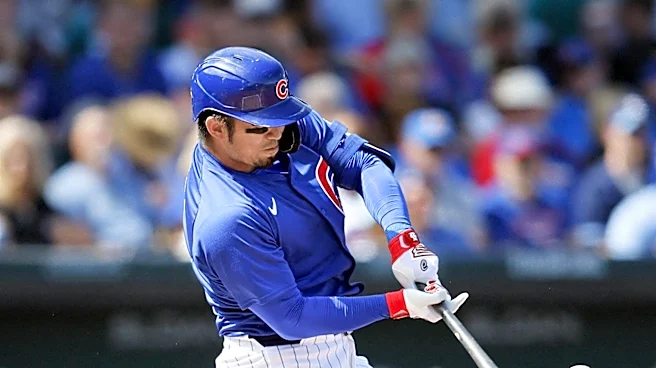
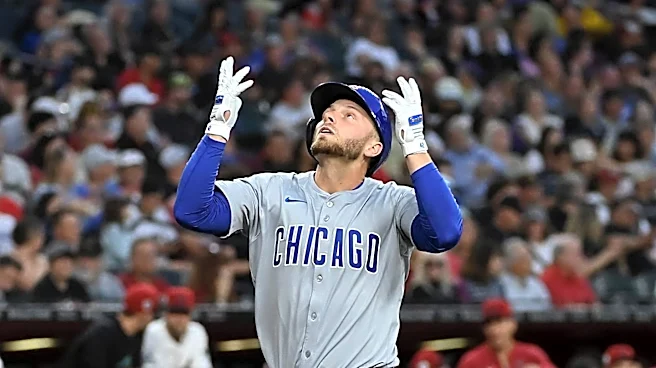
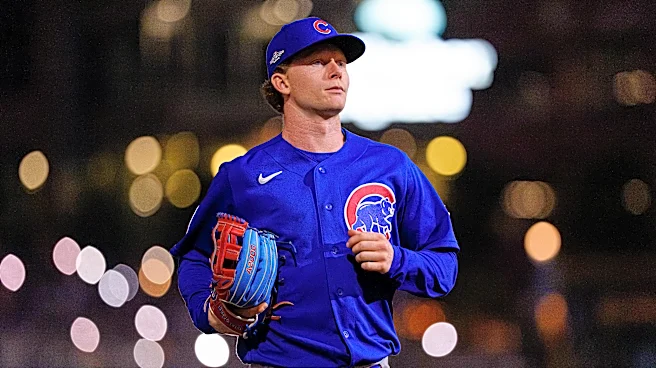
The Chicago Cubs have opted not to extend a qualifying offer to outfielder Ian Happ, a decision that significantly complicates his potential return to the team. While the Cubs did extend a qualifying offer to Seiya Suzuki, they bypassed Happ, whose qualifying offer was
valued at $23.15 million. This move comes despite previous reports suggesting Happ was open to rejoining the Cubs on a discounted deal, following a three-year contract with an average annual value of $20.3 million. Happ's performance in the final two months of the 2026 season saw him demoted to a platoon role, primarily starting against right-handed pitchers, where he slashed .214/.316/.390 with a wRC+ of 98. The Cubs' decision indicates a reluctance to commit to a deal exceeding $23 million per season for Happ.
Why It's Important?
This decision by the Chicago Cubs has significant implications for both the team's roster construction and Ian Happ's free agency. By not extending the qualifying offer, the Cubs avoid a substantial financial commitment but also risk losing a veteran outfielder without compensation. This move suggests the Cubs are prioritizing financial flexibility and are comfortable exploring other options for their outfield, potentially seeking a short-term veteran or relying on prospects like Pedro Ramirez and Matt Shaw. For Happ, the absence of a qualifying offer makes him a more attractive free-agent candidate for other teams, as they would not need to forfeit a draft pick to sign him. Teams like the Pittsburgh Pirates, Atlanta Braves, Cincinnati Reds, New York Yankees, and Philadelphia Phillies, all in need of outfielders, could now pursue Happ more aggressively, potentially driving up his market value despite his recent performance dip.
What's Next?
The Chicago Cubs are now expected to be active in the market for a stopgap veteran outfielder, given the thin free-agent class for outfielders. They may also explore the trade market for potential targets like Steven Kwan, though the Cleveland Guardians might be unwilling to trade him. For Ian Happ, his free agency will likely involve negotiations with multiple teams, as the absence of a qualifying offer makes him a more appealing acquisition. While a return to the Cubs is not entirely ruled out, it would be on the team's terms, likely at a lower financial commitment than the qualifying offer. The Cubs' outfield for the 2027 season is now more likely to feature a mix of new acquisitions and developing prospects.
Beyond the Headlines
The Cubs' decision reflects a broader trend in Major League Baseball where teams are increasingly strategic about qualifying offers, balancing the desire to retain talent with financial prudence and future roster flexibility. Declining a qualifying offer for a player like Happ, who had a down year but still possesses significant upside, highlights the calculated risks teams take in managing their payroll and prospect pipeline. This move could signal a shift in the Cubs' long-term strategy, focusing on developing internal talent and making targeted, value-driven acquisitions rather than overspending on established players. It also underscores the competitive nature of the free-agent market, where a player's value can fluctuate dramatically based on recent performance and the presence or absence of a qualifying offer.