


What's Happening?
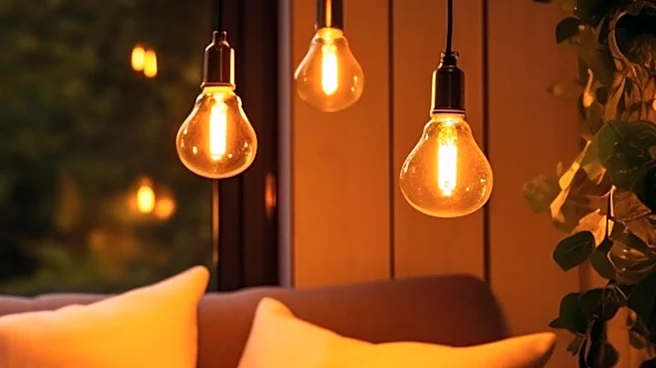
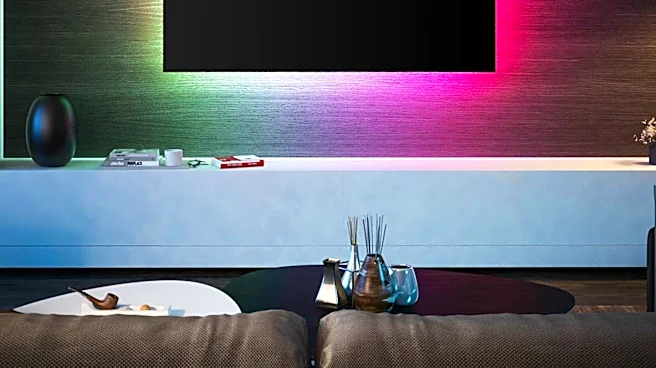
Homeowners are being encouraged to adopt layered lighting strategies to create more inviting and cozy home environments. This approach involves combining ambient, task, and accent lighting to add depth and flexibility to a room. Ambient light provides
general illumination, task lighting focuses on specific activities like reading, and accent lights highlight features or set a mood. Key recommendations include using warm light bulbs (2700K-3000K) to emit a soft yellowish glow, avoiding harsh overhead lighting, and incorporating dimmer switches for adjustable intensity. The use of table lamps, floor lamps, candles, and fairy lights is also suggested to create varied light sources and enhance warmth, while prioritizing LED bulbs for energy efficiency and reduced heat output.
Why It's Important?
The emphasis on layered lighting is significant for several reasons. For individuals, it directly impacts well-being by creating more comfortable and functional living spaces, potentially reducing eye strain and promoting relaxation. From an economic perspective, the shift towards energy-efficient LED bulbs and dimmer switches can lead to reduced electricity consumption and lower utility bills for households. For the home decor and lighting industries, this trend drives demand for a wider variety of lighting fixtures, smart lighting solutions, and specialized bulbs, fostering innovation and market growth. It also highlights a growing consumer awareness of interior design principles and the psychological impact of lighting on mood and productivity, influencing purchasing decisions and design trends.
What's Next?
In the near future, the adoption of layered lighting techniques is expected to become more widespread as consumers seek to optimize their home environments. We may see further integration of smart home technology, allowing for automated lighting adjustments based on time of day, occupancy, or even personal preferences learned over time. The market for specialized lighting products, such as smart bulbs with tunable white and color options, is likely to expand. Additionally, interior designers and home improvement resources will continue to educate consumers on the benefits and practical application of these lighting principles, leading to more sophisticated and personalized home lighting setups. The focus will remain on creating versatile and energy-efficient lighting solutions that cater to diverse needs and moods.
Beyond the Headlines
Beyond the practical aspects, the focus on layered lighting reflects a deeper cultural shift towards creating more mindful and intentional living spaces. It underscores the understanding that our physical environments profoundly influence our emotional states and overall quality of life. This trend could lead to a greater appreciation for the art and science of lighting design, moving it beyond mere utility to a central element of home aesthetics and well-being. Ethically, the promotion of energy-efficient lighting aligns with broader sustainability goals. Culturally, it signifies a move away from generic, one-size-fits-all lighting solutions towards personalized, adaptive environments that cater to individual needs and preferences, transforming homes into more responsive and nurturing spaces.