







What's Happening?
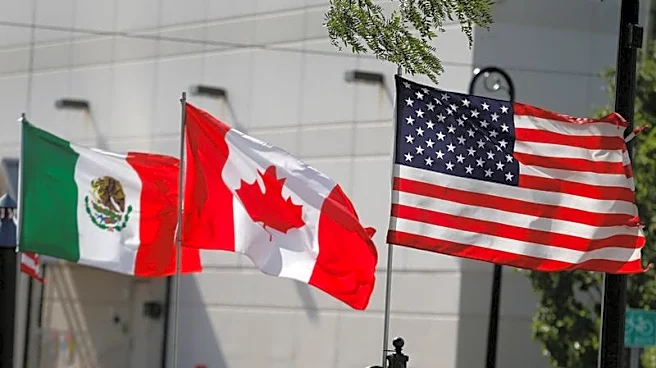
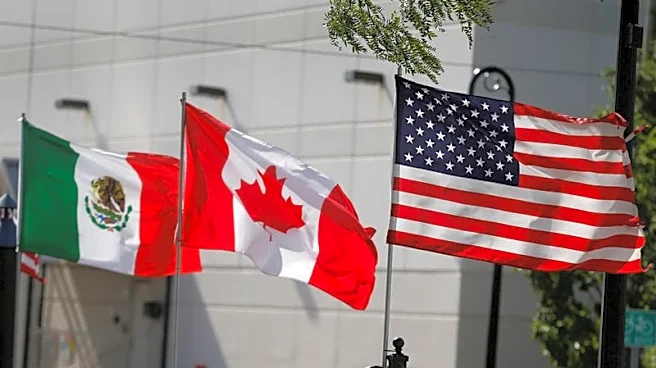
The United States has decided not to renew the United States-Mexico-Canada Agreement (USMCA) in its current form, following a mandatory six-year review. This decision keeps the agreement in force until 2036 but opens the door for further negotiations.
U.S. Trade Representative Ambassador Jamieson Greer stated that the U.S. aims to address perceived shortcomings and trade deficit concerns through continued discussions with Canada and Mexico. Despite the lack of immediate renewal, the agreement's trade rules, tariff preferences, and market access provisions remain unchanged. Canada and Mexico have expressed their commitment to preserving the agreement, which supports millions of jobs and provides stable market access.
Why It's Important?
The USMCA is a critical trade agreement for North America, facilitating billions of dollars in trade annually. It is particularly significant for the agriculture sector, which relies on predictable cross-border trade. The National Pork Producers Council highlighted the importance of maintaining trade relationships with Canada and Mexico, which together account for a significant portion of U.S. pork exports. The decision not to renew the agreement immediately introduces uncertainty, potentially affecting investment decisions and commodity markets. However, the commitment to ongoing negotiations suggests a continued effort to strengthen trade ties and address existing issues.
What's Next?
The U.S. decision initiates a new phase of review and negotiation for the USMCA. Trade officials from the U.S., Canada, and Mexico are expected to continue discussions to resolve outstanding issues. The U.S. has announced additional negotiations with Mexico, and talks with Canada are anticipated. Stakeholders, including policymakers and agricultural leaders, will closely monitor these discussions, as the agreement's future impacts numerous industries and supply chains across North America. The path toward long-term certainty remains uncertain, but the existing agreement continues to provide benefits in the interim.