





What's Happening?
The demand for traditional dairy products has led to industrial livestock farming practices that are increasingly unsustainable, contributing significantly to climate change, animal ethics concerns, and excessive resource consumption. Dr. Britta Winterberg,
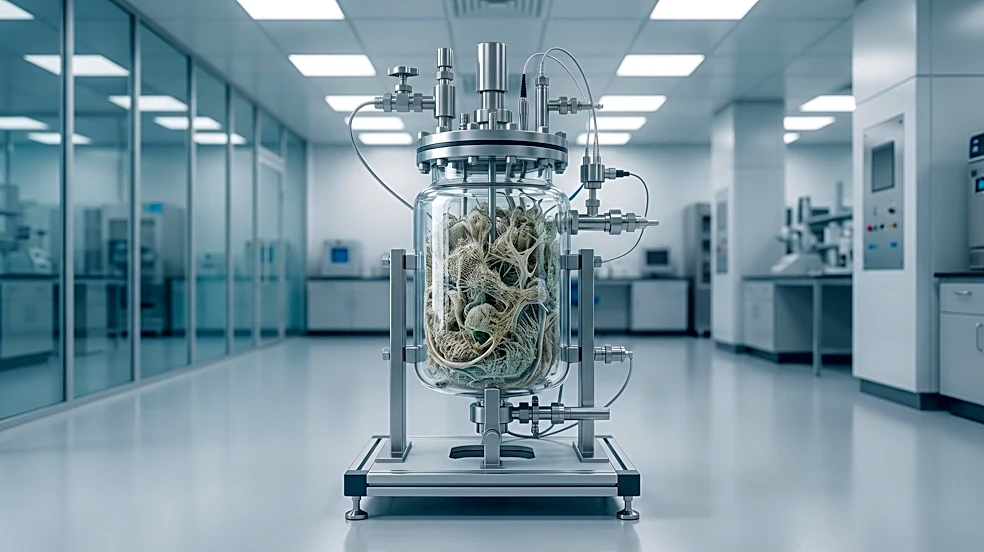
Co-Founder and CSO at Formo (formerly Legendairy Foods), highlights that conventional dairy production uses substantial land, water, and energy, while generating considerable carbon emissions. In response, companies like Formo are developing cellular agriculture, specifically precision fermentation, to create dairy proteins. This innovative process aims to produce the same proteins found in dairy with a fraction of the environmental cost, requiring orders of magnitude less land, water, and energy, and producing significantly fewer carbon emissions compared to traditional methods. The core idea is to 'cut out the cow' while still producing dairy proteins.
Why It's Important?
The rise of cellular agriculture and precision fermentation is critical for addressing the environmental challenges posed by conventional livestock farming. Traditional dairy production is a major contributor to greenhouse gas emissions, deforestation, and water depletion, all of which exacerbate climate change and strain natural resources. By offering a sustainable alternative, cellular agriculture has the potential to drastically reduce the ecological footprint of dairy consumption. This innovation can help meet the growing global demand for protein while mitigating environmental damage, offering a pathway to a more resilient and sustainable food system. It also presents a significant opportunity for the U.S. food industry to lead in sustainable food technology, potentially creating new markets and reducing reliance on resource-intensive agricultural practices.
What's Next?
The future will likely see increased investment and research in cellular agriculture technologies, aiming to scale up production and reduce costs to make these products more accessible to consumers. Transparency in labeling and production processes will be crucial to build consumer trust and facilitate informed choices. As these technologies mature, there may be regulatory discussions regarding the classification and safety of cellular agriculture products. The success of this shift will depend on consumer acceptance, which can be influenced by taste, texture, price, and perceived health benefits. Ultimately, cellular agriculture could transform the food landscape, offering a viable path towards reducing the environmental impact of food production and fostering a more sustainable global food supply.
Beyond the Headlines
The emergence of cellular agriculture extends beyond environmental benefits, touching upon ethical considerations regarding animal welfare and the broader societal relationship with food. By removing animals from the production equation, precision fermentation addresses concerns about industrial farming practices and animal suffering. This technological advancement also challenges traditional notions of agriculture and food, potentially leading to a redefinition of what constitutes 'natural' or 'authentic' food. Furthermore, it could democratize access to protein-rich foods, especially in regions where traditional livestock farming is not feasible or environmentally sustainable. The long-term implications include a potential shift in dietary patterns, a reduction in zoonotic disease risks, and a more resilient food system less susceptible to climate-related disruptions.