




What's Happening?
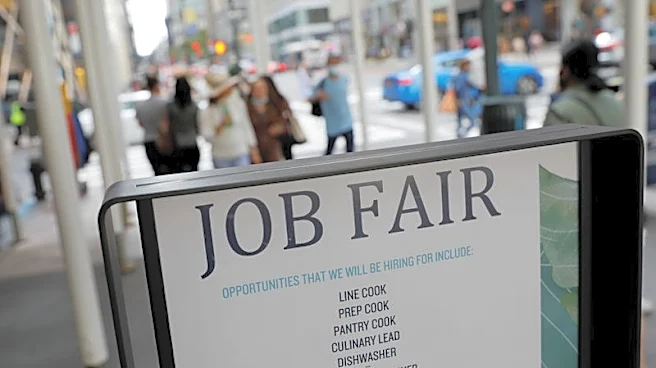
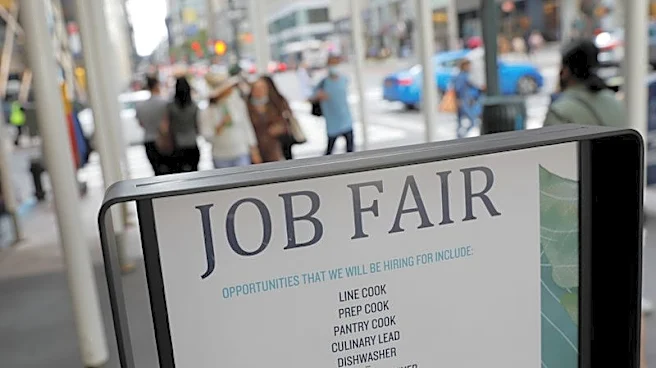
The U.S. labor market is experiencing a decline in job openings, with a notable decrease in vacancies within the healthcare and social assistance sectors. According to the Labor Department's Job Openings and Labor Turnover Survey (JOLTS), job openings fell
by 178,000 to 7.359 million by the end of June. Despite this decline, hiring has improved, and layoffs remain low, indicating a stable labor market. The report also noted a slight increase in the number of people quitting their jobs, which could limit wage growth. Economists suggest that the labor market is not a significant source of inflation, although the Federal Reserve is expected to raise interest rates to address inflation concerns.
Why It's Important?
The decline in job openings, particularly in the healthcare sector, is significant as this sector has been a major driver of job growth due to an aging population. The labor market's stability, despite fewer job openings, suggests that the U.S. economy is adjusting to higher oil prices and inflation. The Federal Reserve's potential interest rate hikes could impact economic growth and employment. The labor market's current 'slow-hire, slow-fire' mode allows the central bank to focus on inflation without immediate concerns about employment levels.
What's Next?
The Bureau of Labor Statistics is set to release the July employment report, which will provide further insights into the labor market's condition. The unemployment rate is expected to remain steady at 4.2%, but there is a risk of an increase. The Federal Reserve's future actions on interest rates will be closely watched, as they could influence economic conditions and labor market dynamics. Additionally, the healthcare sector's reliance on international recruitment may face challenges due to limited labor supply.