








What's Happening?
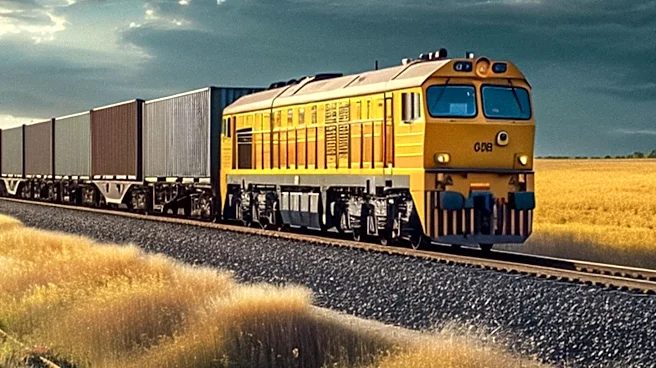
Canadian Pacific Kansas City (CPKC) has announced a new record for grain transportation in June 2026, moving 2.8 million metric tonnes (MMT) of Canadian grain and grain products. This achievement surpasses the previous record set in June 2020. The second
quarter of 2026 also saw record-breaking tonnage and carloads, exceeding previous highs from June 2020. CPKC has consistently set monthly records in five of the first six months of 2026, with notable achievements in January, February, April, and May. In the United States, CPKC set a monthly tonnage record for grain movements in June, transporting 2.5 MMT and surpassing the previous best set in 2022. The second quarter saw a total of 7.5 MMT moved, exceeding the figures from Q2 2022.
Why It's Important?
The record-setting performance by CPKC highlights the company's significant role in North American grain logistics. This achievement underscores the efficiency and capacity of CPKC's transnational railway network, which links Canada, the United States, and Mexico. The increased grain movement is crucial for meeting the demands of agricultural markets and supporting the supply chain. This development is particularly important for the agricultural sector, which relies on efficient transportation to maintain competitiveness and meet global demand. The records set by CPKC also reflect the company's strategic growth and its ability to adapt to market needs, providing enhanced services to its customers.
What's Next?
CPKC's continued success in setting transportation records may lead to further investments in infrastructure and technology to maintain and enhance its service capabilities. The company might explore expanding its network reach and improving logistics solutions to support growing customer demands. Stakeholders, including agricultural producers and exporters, will likely monitor CPKC's performance closely, as it directly impacts their ability to access key markets efficiently. Additionally, CPKC's achievements could influence other transportation companies to enhance their operations to remain competitive in the logistics industry.