




What's Happening?
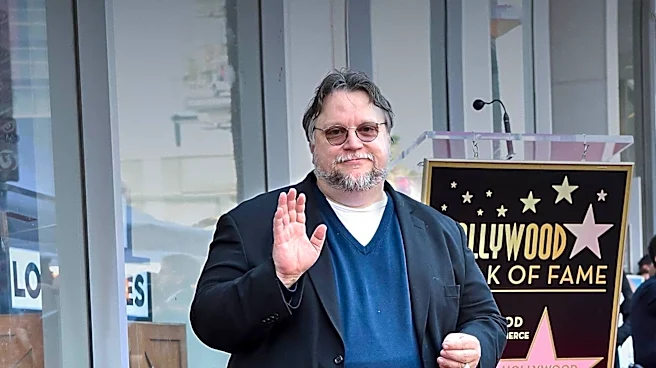
Fans express ongoing disappointment regarding the incomplete 'Hellboy' trilogy directed by Guillermo del Toro. A social media post highlights the enduring appeal of the existing films, praising their visual aesthetics, including set design, costume design, and
practical effects. The post emphasizes how these elements contribute to a sense of realism where characters appear to genuinely inhabit the same space. The sentiment reflects a long-standing desire among viewers to see del Toro's original vision for the series fully realized, a desire that has persisted since the release of the initial films. The discussion underscores the impact these movies have had on their audience, particularly in their visual and atmospheric qualities, which are still considered remarkable years after their release. The lack of a concluding film in the trilogy under del Toro's direction is a recurring point of frustration for many who admired his approach to the comic book adaptation.
Why It's Important?
The continued discussion around Guillermo del Toro's unfinished 'Hellboy' trilogy highlights the significant impact a director's unique vision can have on a film franchise and its audience. For fans, the aesthetic quality and world-building established in the first two films set a high bar, creating an expectation for a consistent narrative and visual conclusion that was never met. This situation underscores the challenges in Hollywood productions, where creative visions can be curtailed by various factors, leaving audiences with unresolved storylines. The enduring appreciation for the existing films' practical effects and design also speaks to a segment of the audience that values tangible filmmaking techniques over purely digital ones, influencing discussions about cinematic artistry and production choices in the industry. The unfulfilled trilogy serves as a case study in how creative continuity and directorial intent are valued by a dedicated fanbase.
What's Next?
While there are no indications of Guillermo del Toro resuming his 'Hellboy' trilogy, the ongoing fan sentiment suggests that the desire for his specific vision to be completed remains strong. This persistent interest could influence future discussions around director-led franchises and the importance of creative control in major film projects. For del Toro, the continued appreciation for his 'Hellboy' films reinforces his reputation as a master of visual storytelling and practical effects, potentially impacting his future project selections or collaborations. The discussion also serves as a reminder to studios about the long-term impact of unfinished series on audience engagement and loyalty. Although a direct continuation is unlikely, the cultural conversation around the uncompleted trilogy will likely persist among film enthusiasts and critics.
Beyond the Headlines
The enduring lament over Guillermo del Toro's unfinished 'Hellboy' trilogy extends beyond mere fan disappointment; it touches upon broader themes of artistic integrity and the commercial realities of filmmaking. Del Toro's distinct visual style and commitment to practical effects are hallmarks of his work, and the 'Hellboy' films are often cited as prime examples. The inability to complete his planned trilogy raises questions about the balance between a director's artistic vision and studio financial or creative decisions. This scenario highlights how creative control can be a contentious point in Hollywood, where beloved franchises can be left incomplete despite critical acclaim and a dedicated fanbase. It also underscores the value placed on a singular artistic voice in an industry often driven by committee decisions, suggesting a deeper cultural appreciation for auteur-driven cinema that prioritizes unique storytelling and visual craftsmanship.