





What's Happening?
ArianeGroup subsidiary MaiaSpace has completed a logistics rehearsal for its Maia launch vehicle, transporting mechanical models of its first and second stages from a factory in Vernon, northern France, to the port at Le Havre. From there, the models were
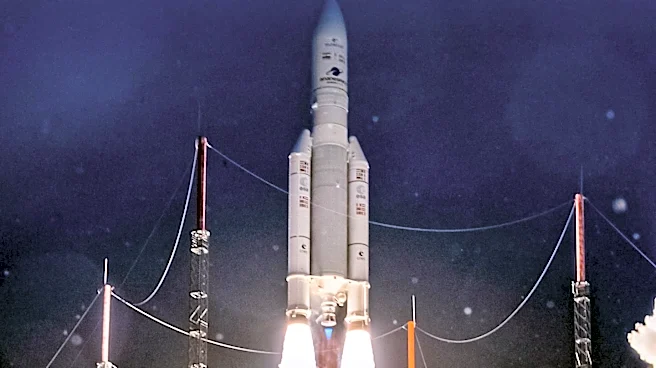
loaded onto a transatlantic vessel on November 22, destined for the Kourou space facility in French Guiana. This end-to-end logistics campaign aims to validate the entire journey of the Maia stages, including navigating tight road restrictions. The Maia launcher is a 50m (164ft) vehicle designed to carry payloads up to 4t, with its first stage powered by three ArianeGroup Prometheus engines and the second stage by a fourth Prometheus engine. The manufacturer plans to develop both expendable and reusable versions, with the first stage capable of being retrieved on a barge at sea. The launcher will utilize the Kourou site’s former Soyuz launch pad, reusing existing infrastructure.
Why It's Important?
This logistics test is a critical step in the development of the Maia launcher, signaling progress towards its anticipated demonstration flight in the second half of next year and commercial operations starting in 2028. The successful validation of the transport process is essential for ensuring the timely and safe delivery of launch vehicle components to the launch site. For the U.S. and global space industry, the introduction of new competitive and flexible launch services, as MaiaSpace aims to provide, could increase options for satellite deployment and reduce launch costs. This development could particularly benefit emerging commercial space activities, offering more accessible and efficient ways to launch payloads. Space Cargo Unlimited has already agreed to purchase capacity on the initial commercial flight, indicating market interest and potential for disruption in the launch services sector.
What's Next?
MaiaSpace is expected to conduct a demonstration flight in the second half of next year, with commercial operations slated to begin in 2028. The company has already secured agreements with several clients, including European satellite operator Eutelsat, rideshare specialist Ride!, and Japanese developer Institute for Q-shu Pioneers of Space, in addition to Space Cargo Unlimited. The ongoing negotiations for future launches and the development of both expendable and reusable versions of the launcher suggest a long-term strategy for MaiaSpace to establish itself as a significant player in the global launch services market. The successful completion of these milestones will be crucial for MaiaSpace to achieve its ambition of providing competitive and flexible launch services.
Beyond the Headlines
The development of the Maia launcher and its focus on both expendable and reusable versions reflects a broader trend in the space industry towards cost-efficiency and sustainability. The ability to retrieve and reuse the first stage of the launcher on a barge at sea highlights an effort to reduce the environmental impact and economic burden of space launches. This approach aligns with the growing demand for more sustainable practices across various industries. Furthermore, the re-use of the Kourou site’s former Soyuz launch pad infrastructure demonstrates an innovative approach to resource optimization, potentially setting a precedent for future space development projects to leverage existing facilities rather than building new ones from scratch. This could lead to more efficient use of resources and faster development timelines in the space sector.