










What's Happening?
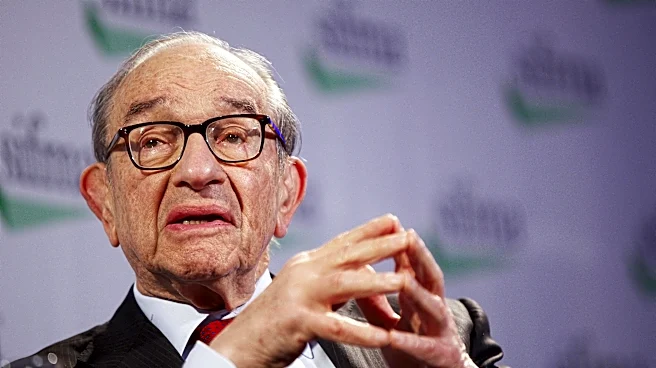
Alan Greenspan, who served as the Federal Reserve Chair for nearly two decades, has died at the age of 100. Greenspan was known for his economic leadership during the 1990s, a period marked by significant economic growth in the United States. He was a prominent
figure in the world of central banking, often regarded as a celebrity due to his influence on monetary policy. Greenspan's tenure was characterized by low interest rates and a light regulatory approach, which contributed to economic booms but also faced criticism for potentially inflating the dot-com bubble and the subprime mortgage crisis. His libertarian philosophy was influenced by novelist Ayn Rand, and he believed in minimal regulation, trusting that bankers' self-interest would prevent risky behavior. Greenspan's legacy is a mix of economic prosperity and the financial crises that followed his policies.
Why It's Important?
Alan Greenspan's impact on U.S. economic policy was profound, shaping the financial landscape for decades. His approach to monetary policy, particularly his decision to maintain low interest rates, played a significant role in the economic expansion of the 1990s. However, his policies also faced criticism for contributing to financial instability, including the dot-com bubble and the subprime mortgage crisis. Greenspan's belief in minimal regulation and reliance on market self-regulation has been debated, especially in light of the financial crises that occurred after his tenure. His death marks the end of an era in central banking, and his legacy continues to influence discussions on economic policy and regulation.
What's Next?
The passing of Alan Greenspan may prompt renewed discussions on the effectiveness of his economic policies and their long-term impact on the U.S. economy. Economists and policymakers might revisit the balance between regulation and market freedom, considering the lessons learned from the financial crises associated with Greenspan's tenure. As the U.S. continues to navigate economic challenges, Greenspan's legacy could influence future decisions on monetary policy and regulatory frameworks.
Beyond the Headlines
Alan Greenspan's career highlights the complexities of economic stewardship and the challenges of predicting market behavior. His reliance on market self-regulation reflects a broader debate on the role of government in managing economic risks. Greenspan's influence extended beyond monetary policy, affecting cultural perceptions of economic leadership and the power dynamics within the financial sector. His relationship with Ayn Rand and his libertarian views add a philosophical dimension to his legacy, prompting discussions on the moral foundations of capitalism and the responsibilities of economic leaders.