
What's Happening?
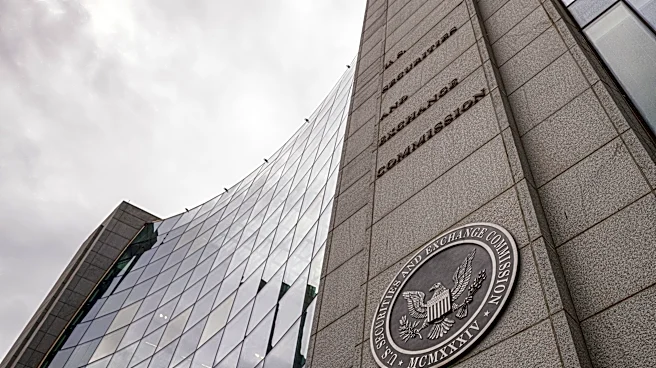
The U.S. Securities and Exchange Commission (SEC) has fined two U.S. investment advisers in 2024 for making unsubstantiated claims about their use of Artificial Intelligence (AI). Delphia was penalized
$225,000 for stating in SEC filings, press releases, and on its website that it utilized AI and machine learning with client data for investment processes, capabilities the SEC found it did not possess. Global Predictions, which marketed itself as the 'first regulated AI financial advisor,' was fined $175,000 for similar reasons. These cases, referred to as 'AI washing,' demonstrate that regulators are now scrutinizing whether organizations can provide concrete evidence to support their public statements regarding AI implementation, moving beyond mere policy documentation to demand verifiable proof of AI system functionality and compliance.
Why It's Important?
These SEC actions are crucial as they signal a shift in regulatory focus from policy documentation to demonstrable evidence of AI claims. This development has significant implications for U.S. businesses, particularly those in the financial sector, that are increasingly incorporating AI into their operations and marketing. The fines underscore the importance of rigorous internal auditing and validation processes to ensure that public statements about AI capabilities are accurate and verifiable. Companies that fail to back up their AI claims with evidence risk not only financial penalties but also reputational damage and loss of investor trust. This regulatory stance encourages greater transparency and accountability in the burgeoning AI industry, pushing firms to implement robust AI governance and risk management frameworks.
What's Next?
Following these enforcement actions, U.S. companies, especially investment advisers, are expected to enhance their internal audit and compliance procedures related to AI. There will likely be an increased demand for professionals with expertise in AI auditing, such as those holding the Advanced in AI Audit (AAIA) certification, to verify AI system claims. The SEC's actions may also prompt other regulatory bodies to adopt similar evidence-based approaches to AI compliance. Businesses will need to focus on building comprehensive evidence trails for their AI systems, including documentation of data management, development lifecycles, testing techniques, and bias detection. This will necessitate a move beyond simply having AI policies to actively demonstrating that these policies are implemented and effective in practice.
Beyond the Headlines
The SEC's 'AI washing' cases highlight a broader ethical and legal challenge in the digital age: the gap between marketing claims and actual technological capabilities. This issue extends beyond AI to other complex technologies where companies might overstate their advancements to attract investment or customers. The emphasis on verifiable evidence reflects a growing regulatory maturity in addressing the complexities of emerging technologies. It also underscores the importance of 'explainable AI' and algorithmic transparency, as companies will need to articulate not just what their AI does, but how it does it, and provide proof. This trend could lead to a more responsible and trustworthy AI ecosystem, but it also places a significant burden on companies to invest in robust internal controls and auditing capabilities, potentially favoring larger firms with more resources.